Gnocchi: Explore the Versatility of Potato-Based Pasta
Ever wondered why Italian gnocchi is loved worldwide? Is it the soft texture, rich flavor, or how well it pairs with sauces?
Gnocchi, a traditional Italian dish, is more than just pasta. It’s a culinary journey. It pairs well with many ingredients, making it a hit among food lovers.
The charm of Gnocchi is its flexibility. It can be a cozy meal or a fancy dinner. Gnocchi can be dressed up or down for any event.
Key Takeaways
- Discover the origins of Italian gnocchi and its evolution.
- Explore different ways to pair gnocchi with sauces and ingredients.
- Learn about the nutritional value of potato-based pasta.
- Find out how gnocchi is enjoyed in different cuisines around the world.
- Get tips on making gnocchi at home.
What is Gnocchi?
Gnocchi, meaning “knuckle” in Italian, comes from ancient Roman cuisine. This potato pasta has grown to be a key part of traditional Italian cuisine. It’s made from potatoes, flour, and sometimes eggs. This mix gives gnocchi a soft yet firm texture that goes well with many sauces.
The Origins of Gnocchi
Gnocchi’s history goes back to the Roman Empire. It was first made with semolina or other grains. As potatoes became common in Italy, gnocchi changed to include them. The name “gnocchi” might come from the Italian word for “knuckle,” possibly because of its shape or how it’s made.
Types of Potatoes to Use
The potatoes used in gnocchi affect its taste and texture. Russet potatoes are best because they have a lot of starch. This makes the gnocchi light and tender. Yukon Gold potatoes can also be used, giving a different flavor.
| Potato Variety | Starch Content | Gnocchi Texture |
|---|---|---|
| Russet | High | Light, Tender |
| Yukon Gold | Medium | Soft, Slightly Dense |
| Red Bliss | Low | Dense, Heavy |
Traditional vs. Modern Variations
Traditional gnocchi recipes are still loved, but new ones have come out too. Some now use sweet potatoes or other roots for a unique taste. Modern cooking methods also make it easier to get the perfect gnocchi texture.
In summary, gnocchi is a dish with a long history and many ways to make it. Whether you follow old recipes or try new ones, gnocchi is a tasty and comforting choice.
Cooking Techniques for Gnocchi
Learning to cook gnocchi can make your pasta dishes even better. Whether you’re making homemade gnocchi or following a gnocchi recipe, knowing how to cook them is key. It helps get the right texture and flavor.
Boiling vs. Baking
There are two main ways to cook gnocchi: boiling and baking. Boiling is traditional. You put the gnocchi in boiling, salted water until they float. It’s fast but needs careful watching to avoid overcooking.
Baking gives a dry, roasted taste that goes well with many sauces. Just toss the gnocchi with oil, add salt and herbs, and roast in a hot oven until they’re golden.

Using a Gnocchi Board
A gnocchi board helps make the gnocchi’s surface texture. By rolling the gnocchi over it, you get small indentations for sauces to stick to. It’s not necessary but adds a real touch to homemade gnocchi.
Tips for Perfect Texture
Getting the right texture is crucial for enjoying gnocchi. Here are some tips:
- Don’t overwork the dough to avoid dense gnocchi.
- Cook the gnocchi al dente to prevent them from becoming mushy.
- Choose the right potatoes for a lighter, tender gnocchi.
| Cooking Method | Texture Outcome | Best For |
|---|---|---|
| Boiling | Soft, tender | Traditional gnocchi dishes |
| Baking | Crisp on the outside, soft inside | Gnocchi with roasted sauces |
| Pan-frying (after boiling) | Crisp exterior, fluffy interior | Gnocchi with brown butter or sage sauces |
Popular Gnocchi Sauces
Gnocchi’s mild flavor is perfect for many sauces. The right sauce can change how the dish tastes and feels. Some sauces go better with gnocchi than others.

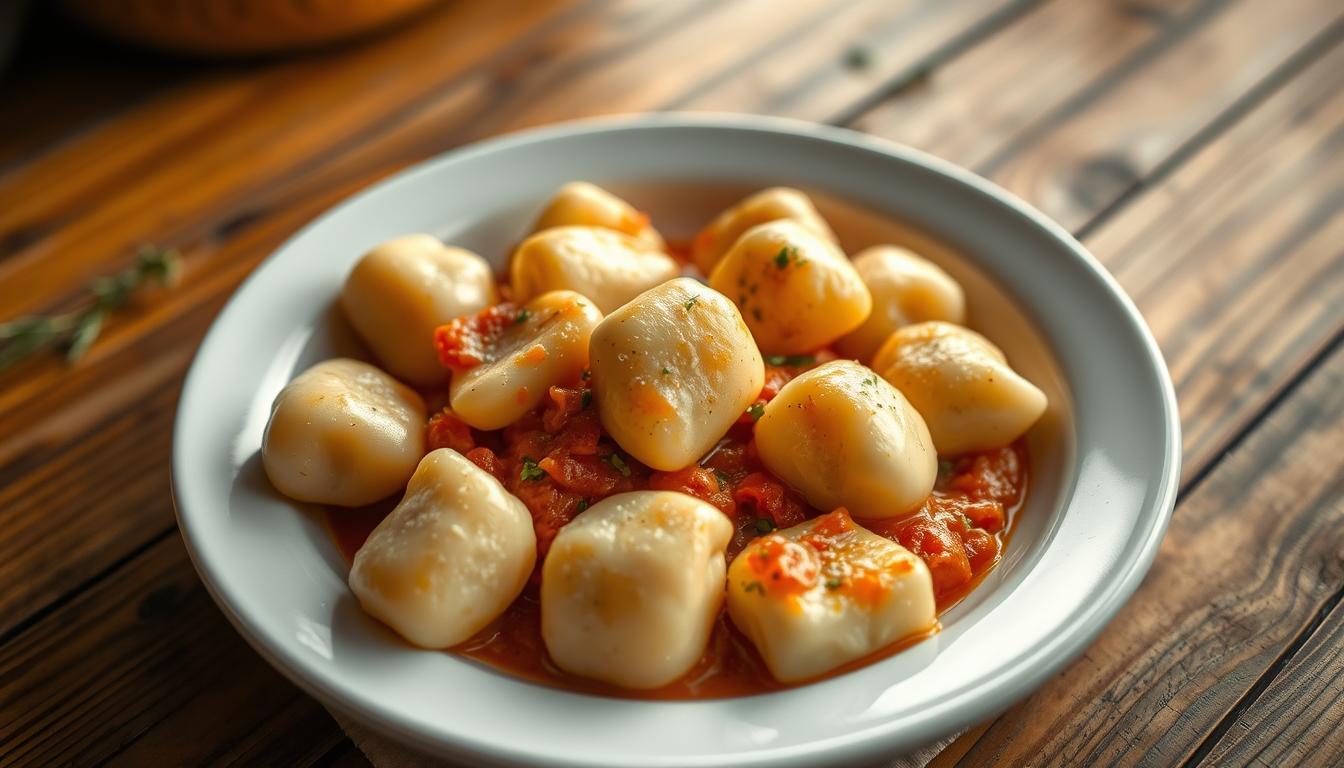
Classic Tomato Sauce
Classic tomato sauce is a favorite in Italy. It’s made with fresh tomatoes, garlic, and herbs. This adds a tangy flavor to gnocchi.
To make it, sauté garlic, then add crushed tomatoes. Simmer with basil and oregano.
Creamy Pesto Sauce
Pesto sauce adds a creamy twist. It’s made with basil, garlic, pine nuts, Parmesan, and olive oil. This creates a smooth, vibrant sauce.
Adding heavy cream or Greek yogurt makes it creamier. It’s a great match for gnocchi.
Sage Butter Sauce
Sage butter sauce offers a nutty, aromatic flavor. It’s made by melting butter with sage leaves and sometimes garlic. This sauce is simple yet sophisticated.
It’s perfect with pan-seared gnocchi. It adds a crispy texture and a burst of flavor.
These sauces not only improve gnocchi’s taste but also offer variety. Whether you want something classic or creamy, there’s a sauce for everyone.
Gnocchi in Italian Cuisine
Italy’s rich culinary heritage shines through its potato dumplings, called gnocchi. For centuries, gnocchi has been a key part of Italian cooking. It has changed over time, influenced by different regions and tastes.

Regional Specialties
Italy boasts many gnocchi recipes, each unique to its region. In Trentino-Alto Adige/Südtirol, you’ll find potato and ricotta gnocchi with melted butter and sage. In Campania, gnocchi are made with bresaola or local ingredients, showing the dish’s flexibility.
- Gnocchi alla Romana in Lazio, typically served with a rich tomato sauce.
- Gnocchi alla Sorrentina in Campania, often topped with fresh tomatoes and mozzarella.
- Gnocchi with wild mushroom sauces in Tuscany, highlighting the region’s love for foraged ingredients.
Gnocchi as a Comfort Food
Gnocchi is more than a meal in Italy; it’s a comfort food that brings warmth and nostalgia. It’s often enjoyed during family gatherings and special events. Its soft texture and rich sauces make it both nourishing and satisfying.
Celebrating Gnocchi Day
In Italy, gnocchi is celebrated on various days, with some regions having their own festivals. For example, Giorno del Gnocchi (Gnocchi Day) is a time for locals and visitors to come together. It’s a celebration of Italian culinary tradition and the joy of sharing meals.
Nutritional Benefits of Gnocchi
Gnocchi is a healthy choice for your diet. It’s mainly made from potatoes, which offer many nutritional benefits. These benefits make gnocchi a great part of a balanced diet.

Carbohydrate Content
Gnocchi is a great source of carbohydrates. These carbs give your body the energy it needs. The potatoes in gnocchi have complex carbs. These carbs are digested slowly, giving you energy over time.
Rich in Vitamins and Minerals
Gnocchi also has vitamins and minerals. Potatoes in gnocchi have potassium. Potassium helps keep your blood pressure healthy and supports your bones. Adding spinach or herbs to gnocchi can make it even more nutritious.
Gluten-Free Alternatives
There are gluten-free gnocchi options for those who can’t have gluten. These are often made from potatoes or other gluten-free flours. This makes gnocchi available to more people.
Pairing Drinks with Gnocchi
Gnocchi, made from potatoes, is a great base for drinks. The right drink can make the flavors pop, making your meal better.
Wine Pairings
Wine choices for gnocchi should be light. Pinot Grigio and Gavi are top picks. They have a crisp taste that goes well with gnocchi’s softness.
A light-bodied red like Dolcetto is also good. It’s perfect for gnocchi with bold sauces.
| Wine Type | Gnocchi Dish | Reason |
|---|---|---|
| Pinot Grigio | Gnocchi with light cream sauce | Crisp acidity cuts through richness |
| Dolcetto | Gnocchi with tomato and meat sauce | Fruity flavors complement the sauce |
Non-Alcoholic Options
Non-alcoholic drinks can also be great with gnocchi. Iced tea with herbs like lemon verbena or peach tea is refreshing. It’s perfect for rich gnocchi dishes.
Sparkling water with lemon or fruit juice is great. It cleanses your palate between bites.
Craft Beer Recommendations
Craft beer is another great choice for gnocchi. A crisp lager or pilsner is a good match. It complements the dish without being too strong.
For gnocchi with bold sauces, try a brown ale or amber ale. Their malty flavors add to the meal’s enjoyment.

Creative Gnocchi Recipes to Try
Exploring creative gnocchi recipes is a fun and tasty journey. Gnocchi’s versatility lets home cooks try new flavors and ingredients. This makes for unique dishes.

Spinach and Ricotta Gnocchi
Spinach and ricotta gnocchi is a favorite among many. It mixes soft gnocchi with creamy ricotta and fresh spinach. To make it, mix cooked spinach with ricotta, parmesan, and egg. Then, add flour to form a dough.
Tips for making spinach and ricotta gnocchi: Use fresh spinach for the best taste. Also, avoid overmixing the dough to keep the gnocchi soft.
Gnocchi with Roasted Vegetables
Gnocchi with roasted vegetables is a tasty and creative dish. Roasting veggies like cherry tomatoes, zucchini, and bell peppers enhances their sweetness. This sweetness complements gnocchi’s savory taste.
- Choose colorful vegetables for a beautiful dish.
- Toss roasted veggies with gnocchi, olive oil, and parmesan cheese.
Dessert Gnocchi Ideas
For a sweet twist, try dessert gnocchi. Sweet potato gnocchi can be paired with caramel sauce or cinnamon sugar. It’s a tasty dessert.
Some ideas for dessert gnocchi include: Sweet potato gnocchi with caramel sauce, pumpkin gnocchi with cinnamon sugar, or apple gnocchi with caramel and nuts.
These creative gnocchi recipes show how versatile this Italian dish is. Whether you want something savory or sweet, gnocchi can be adapted to any taste.
Storing and Reheating Gnocchi
To enjoy gnocchi at its best, it’s important to know how to store and reheat it. Whether you make gnocchi from scratch or buy it, the right techniques can greatly improve its taste and texture.
Freezing Fresh Gnocchi
Freezing is a great way to keep fresh gnocchi. First, lay the gnocchi out in a single layer on a baking sheet with parchment paper. This stops them from sticking together. Once frozen, put them in an airtight container or freezer bag, pressing out air before sealing.
To cook frozen gnocchi, just add them to boiling, salted water. They’ll float when they’re done, which takes a bit longer than fresh gnocchi.
Best Practices for Leftovers
Leftover cooked gnocchi should be stored right to keep it good. Cool it down first, then put it in an airtight container. It can stay in the fridge for up to 3 days. Always heat it to a safe temperature when you reheat it.
To keep leftover gnocchi moist, add a bit of gnocchi sauce before storing. This keeps it flavorful and moist.
Reheating Techniques
There are a few ways to reheat gnocchi, depending on what you like. Boiling is simple: just heat it in boiling water until it’s warm. For a crispy outside, pan-fry it with oil or butter until golden.
Reheating in the microwave is another option. Put the gnocchi in a dish, cover it, and heat on high for short bursts. Be careful not to overheat, as it can make the gnocchi tough.

No matter how you reheat it, the goal is to warm it gently and evenly. This keeps the potato pasta soft and enjoyable, even after reheating.
Gnocchi Around the World
Gnocchi, a traditional Italian pasta, is loved worldwide. Its comfort and versatility have made it popular globally. Countries have put their own twist on this dish, making it their own.
Diverse Global Takes
Across the globe, gnocchi has taken on many forms. In Eastern Europe, it’s pan-seared. In Asia, it’s filled with creative ingredients. This shows how well gnocchi adapts to different tastes.
Gnocchi in the United States
In the U.S., gnocchi is a hit in fancy restaurants and home kitchens. Italian gnocchi is a top choice. Chefs love to try new sauces and ingredients with it.
A Growing Global Appreciation
Gnocchi’s popularity keeps growing. More people are interested in trying new foods and cooking methods. Gnocchi brings cultures together, loved by many for its comfort and flavor.