Mushroom Foraging: Autumn’s Edible Fungi Treasure Trove
As the leaves change colors and the air cools, autumn mushrooms start to appear. They offer a treasure trove for those who know where to look.
Are you ready to uncover the secrets of the forest floor? Discover the joys of mushroom foraging. This ancient practice connects us with nature and lets us enjoy the flavors of the season’s edible fungi.
Whether you’re a seasoned forager or just starting, the world of mushroom foraging is exciting. It’s an adventure that combines exploration, culinary delight, and a deep connection with nature.
Key Takeaways
- Understanding the basics of mushroom foraging
- Identifying the best practices for foraging autumn mushrooms
- Exploring the variety of edible fungi available during autumn
- Learning how to safely forage and prepare wild mushrooms
- Discovering the joys and benefits of connecting with nature through foraging
Understanding Mushroom Foraging Basics
Before you start mushroom foraging, it’s important to learn the basics. This activity combines adventure with a deep connection to nature. It’s about searching for and gathering wild mushrooms.
What is Mushroom Foraging?
Mushroom foraging means exploring nature to find wild mushrooms. You need to know about different mushroom species, where they grow, and how to spot them safely. It’s a rewarding way to enjoy the outdoors and find a unique ingredient for cooking.
To begin, you must learn about the various mushroom types. You need to know their growth habits and where they like to grow. This knowledge helps you forage successfully and do it in a way that’s good for the environment.
Importance of Foraging Knowledge
Knowing what you’re doing is key in mushroom foraging. It’s vital to tell edible mushrooms from toxic ones. Understanding wild mushroom identification and knowing the risks are essential for safe foraging.
Foraging knowledge also includes foraging tips that make the experience better. Knowing where and when to forage, and how to handle mushrooms, can greatly improve your finds. This knowledge helps you enjoy foraging more and get better results.
By learning the basics of mushroom foraging, you can have a safe and fun experience. You’ll also increase your chances of finding great mushrooms.
The Autumn Season and Mushroom Growth
When autumn comes, it’s the best time to go foraging. The cooler weather, more moisture, and the breakdown of organic matter make it perfect for mushrooms to grow.

Why Fall is Ideal for Foraging
Fall is the best season for finding mushrooms. The weather is just right, with temperatures that aren’t too hot or cold. Plus, the rain helps mushrooms grow.
During fall fungi picking, you can find many different kinds of mushrooms. There are chanterelles and oyster mushrooms, each with its own taste and texture.
Climatic Conditions Favorable for Fungi
The weather in autumn is great for mushrooms. The cool, moist air helps them grow. And when the leaves fall, the ground becomes rich with nutrients.
- Cooler Temperatures: Many mushroom species thrive in the cooler temperatures of autumn, which slow down the degradation process and allow for a more gradual release of nutrients.
- Increased Moisture: Autumn rainfall is crucial for mushroom growth, providing the necessary hydration for fungi to develop and fruit.
- Decomposition: The decomposition of fallen leaves and other organic matter enriches the soil, creating a fertile ground for mushrooms to grow.
Knowing about these conditions can make foraging better. It helps you find the best places for autumn mushrooms. By enjoying the seasonal harvest, foragers can discover the delicious mushrooms of autumn.
Essential Tools for Mushroom Foraging
Mushroom foraging gets better with the right tools. The right gear helps you find and collect mushrooms. It also makes sure you’re not harming the environment.
Foraging Baskets and Knives
A good foraging basket is key for carrying your finds. Choose baskets made from breathable materials like wicker or rattan. They keep mushrooms fresh by allowing air to circulate.
A foraging knife is also vital. It’s used to cut mushrooms at the base of the stem. This helps keep the mycelium alive, which is good for the fungi.
When picking a foraging knife, go for one with a curved blade. It makes cutting easier without harming the mycelium. Some knives also have a brush on the other end for cleaning mushrooms.
Field Guides and Apps
It’s important to know which mushrooms are safe to eat. Field guides have detailed descriptions and images of different mushrooms. They help you identify what you find.
Foraging apps are also useful. They use AI to recognize mushroom images. Many apps also have GPS to mark where you find mushrooms.
Using both old and new methods makes mushroom hunting safer and more fun.
Popular Edible Mushrooms in Autumn
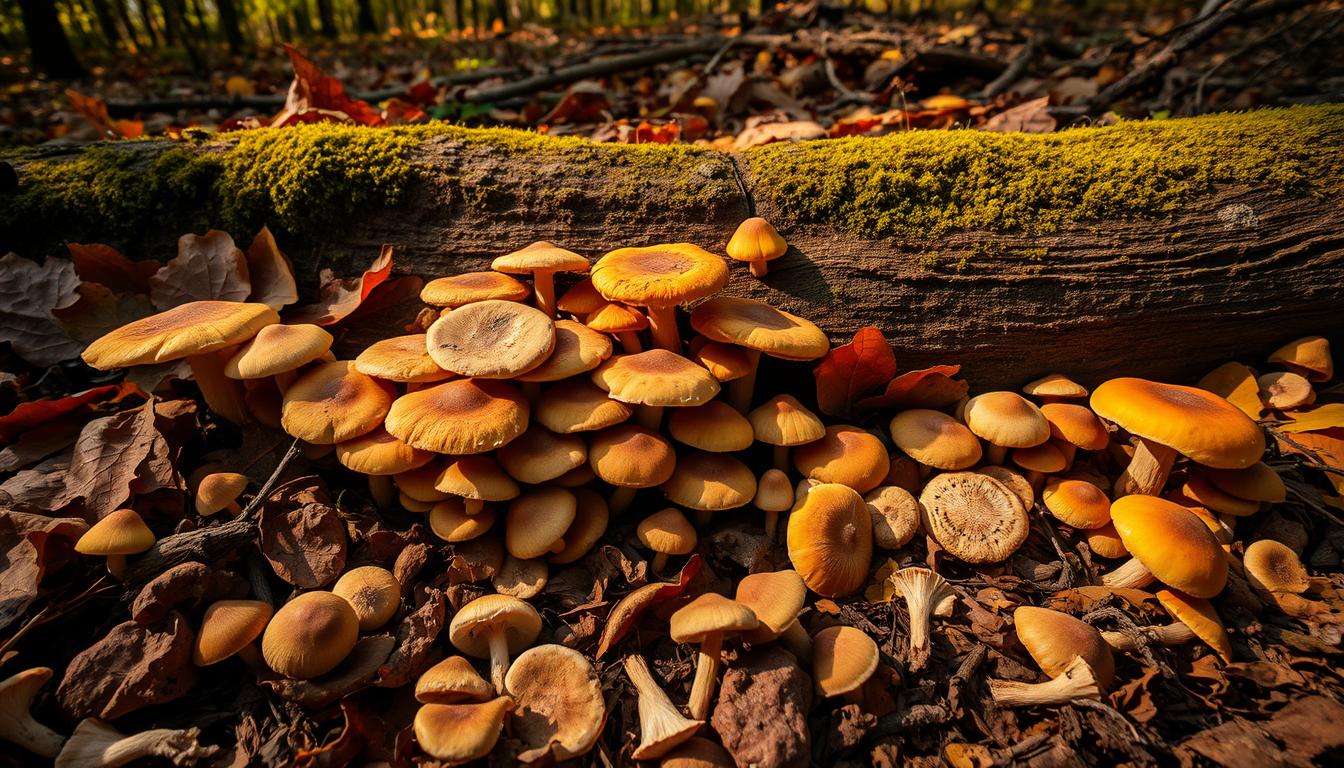
As autumn arrives, the forest floor turns into a treasure trove for foragers. They search for chanterelles, porcini, and oyster mushrooms. These mushrooms are not just fun to find but also offer many culinary options.
Chanterelles: Golden Delights
Chanterelles are a top choice for foragers in autumn. Their fruity smell and peach-colored flesh make them a culinary gem. Look for their funnel-shaped caps and wavy edges to find them.

Porcini: Culinary Treasures
Porcini mushrooms are loved for their rich flavor and firm texture. They grow near certain trees like oak and pine. To spot porcini, look for their cap shape and fine white lines on the stem.
Oyster Mushrooms: Versatile Fungi
Oyster mushrooms are popular for their cooking versatility and mild taste. They grow on trees, stumps, and decaying wood. Identify them by their fan-shaped caps and lack of a true stem.
| Mushroom Type | Distinctive Features | Culinary Uses |
|---|---|---|
| Chanterelles | Funnel-shaped cap, fruity aroma | Sauces, soups, sautéed dishes |
| Porcini | Rich, nutty flavor, firm texture | Risottos, pasta dishes, grilled |
| Oyster Mushrooms | Fan-shaped caps, delicate flavor | Stir-fries, soups, vegetarian dishes |
Knowing the traits and habitats of these autumn mushrooms can make foraging and cooking more fun. Whether you’re experienced or new, finding these mushrooms is a rewarding adventure.
Safety Tips for Mushroom Foraging
Mushroom foraging is both exciting and risky. It’s important to know how to stay safe while exploring for wild mushrooms. Learning the basics of safety can make your hobby fun and safe.
Identifying Edible vs. Toxic Species
Knowing the difference between safe and dangerous mushrooms is key. Some mushrooms can be deadly if eaten. Always check a trusted field guide or ask an expert before eating any wild mushroom.
Look for special features like cap shape, color, and stem details. Some mushrooms, like chanterelles, have unique smells. But, don’t just look, as some poisonous mushrooms look like safe ones.
| Mushroom Type | Edible/Toxic | Distinctive Features |
|---|---|---|
| Chanterelle | Edible | Fruity aroma, yellow to orange color |
| Death Cap | Toxic | Greenish cap, white gills, volva at base |
| Oyster Mushroom | Edible | Fan-shaped or oyster-shaped cap |
First Aid for Mushroom Poisoning
If you think you’ve been poisoned by mushrooms, act fast. Symptoms can range from mild to severe, even life-threatening. If you think you’ve been poisoned, get medical help right away.
While waiting for help, tell the doctor as much as you can about the mushroom. Include its look and when you ate it. This info is very important for treatment.

By being careful and informed, mushroom foraging can be rewarding and safe. Always put safety first and keep learning about foraging tips and mushroom hunting.
The Art of Sustainable Foraging
Foraging for wild mushrooms is more than just a hobby. It requires knowledge and a commitment to keeping the environment healthy. When we go into the forest to find seasonal treats, we must do it in a way that protects the ecosystem for the future.

Ethical Harvesting Practices
Ethical harvesting is key to sustainable foraging. It means selectively picking mushrooms and not harming the area around them. We also need to make sure the mycelium, the underground part of the mushroom, stays healthy. This helps keep the forest floor diverse and healthy.
Some important practices include:
- Only picking what you need to avoid over-harvesting.
- Using a basket or mesh bag to allow spores to disperse.
- Avoiding the use of machinery or tools that can damage the habitat.
Impact on Ecosystem and Biodiversity
The way we forage affects the ecosystem and biodiversity. Sustainable foraging can coexist harmoniously with nature, keeping the environment balanced. But, if we forage carelessly, we can harm the habitat and lose species.
To avoid these problems, foragers need to understand the delicate balance of forest ecosystems. They should know how mushrooms fit into the ecosystem and how removing them can affect other plants and animals. This knowledge helps keep the forest healthy.
By choosing sustainable foraging, we help protect forest foraging areas. This ensures these places stay full of life and continue to offer seasonal harvests for many years.
Cooking with Foraged Mushrooms
The joy of mushroom foraging reaches its peak in the kitchen. Here, you can try out many dishes with your finds. Whether you’re a pro or a newbie, cooking with mushrooms is fun.

Simple Recipes for Beginners
For beginners, start with easy recipes. Try sautéed autumn mushrooms with garlic and herbs. Clean and slice the mushrooms, then heat olive oil in a pan. Add minced garlic and sauté until the mushrooms brown.
Season with salt, pepper, and herbs like thyme or rosemary. Another easy dish is mushroom risotto. It needs some care but is simple. Start by sautéing onions and garlic, then add Arborio rice.
Cook until the rice is lightly toasted. Add vegetable broth slowly, stirring constantly. Finish with Parmesan and your mushrooms.
Preserving Fungi: Drying and Freezing
To enjoy mushrooms all year, preserve them. Drying and freezing are good methods.
- Drying: Use a food dehydrator or oven on low to dry sliced mushrooms. Store in airtight containers.
- Freezing: Clean and chop mushrooms, then sauté them lightly. Cool before freezing in airtight containers or bags.
| Preservation Method | Steps | Storage |
|---|---|---|
| Drying | Slice mushrooms, dehydrate or oven dry | Airtight containers |
| Freezing | Sauté chopped mushrooms, cool | Airtight containers or freezer bags |
Follow these foraging tips and preservation methods to enjoy mushrooms all year. Whether you love cooking or are just starting, foraged mushrooms open up a world of possibilities.
Local Foraging Groups and Communities
Joining local foraging groups can be very rewarding. It teaches you about sustainable foraging and makes your mushroom hunting trips better.
Being part of these groups means you get lots of knowledge and experience. Seasoned foragers are always ready to share their skills. They teach you about forest foraging and how to stay safe.
Joining a Foraging Club
Foraging clubs are great for meeting people who love seasonal harvest as much as you do. These clubs have guided tours, workshops, and other events. They help you get better at foraging.
When picking a club, think about what they focus on. Look at the experience of their members and any costs or rules.

Participating in Workshops and Events
Workshops and events by local groups are very enriching. They give you hands-on practice and lessons from experts.
These events might teach you about mushroom identification, how to forage sustainably, and using mushrooms in cooking. They help you understand forest foraging better and improve your skills.
To find local groups, search online, check community boards, or ask at outdoor stores. Many groups also use social media to share about events.
Laws and Regulations Surrounding Foraging
When you start mushroom foraging, knowing the local laws is key. Foraging is a fun hobby but has rules that change by place. It’s important to know these laws to avoid trouble and help protect nature for the future.
Foraging laws aim to let people pick wild foods while keeping the environment safe. They decide what you can pick, where, and how much.
Understanding Local Foraging Laws
Local laws on foraging can differ a lot, even in the same state. Always check the laws in your area before you go foraging. Some places need permits, while others might not let you forage at all.
- Look up local government websites for foraging rules.
- Talk to local foraging groups for tips from experts.
- Learn about any permits or licenses you might need.

National Parks and Foraging Restrictions
National parks have their own rules for foraging. These places are full of life and great for foraging, but they’re also protected. Foraging might be limited or not allowed in some areas.
- Some national parks let you forage with a permit.
- Other areas in parks might be off-limits to protect special habitats.
- Always ask park rangers or visitor centers for the latest foraging rules.
Following these laws helps keep wild mushrooms and their homes safe. It makes foraging better for everyone and helps the environment.
Documenting Your Foraging Adventures
Keeping a record of your foraging escapades can deepen your love for nature and fungi. It lets you reflect on your experiences, track your progress, and share your knowledge. This way, you can learn more and inspire others.

Keeping a Foraging Journal
A foraging journal is essential for any mushroom hunter. It helps you note the edible fungi you find, like where you found them and what they look like. A journal lets you:
- See how your finds change over time and spot patterns in autumn mushroom growth.
- Write down the weather, soil, and other things that might affect fungi.
- Draw or take pictures of mushrooms to remember and identify them better.
Sharing Your Experience on Social Media
Sharing your foraging adventures online is also a good idea. It lets you connect with others and encourage new people to try foraging. When you post, think about:
- Posting clear photos of your mushroom hunting trips, including the mushrooms and where you found them.
- Offering tips and advice for those interested in finding edible fungi.
- Talking back to your followers and asking questions to start conversations.
By sharing your foraging stories, you can make your experience better and help others. Whether in a private journal or on social media, your passion for foraging can inspire a love for nature in others.
Health Benefits of Foraged Mushrooms
Wild mushrooms are packed with nutrients and have healing properties. They are full of proteins, vitamins, and minerals. This makes them a great choice for a healthy diet.

Nutritional Value of Edible Fungi
Edible fungi are very nutritious. They are a good source of protein, perfect for vegetarians and vegans. They also have vitamins and minerals like vitamin D, copper, and selenium.
These nutrients help keep your immune system strong and your body healthy. You can add foraged mushrooms to your meals in many ways. Try sautéing, roasting, or adding them to soups and stews.
Nutritional Highlights of Common Edible Fungi:
- High protein content
- Rich in vitamin D
- Good source of antioxidants
- Contains essential minerals like copper and selenium
Medicinal Uses and Natural Remedies
Foraged mushrooms are also used in traditional medicine. Some types, like reishi and chaga, boost the immune system. They help support overall health.
Here are some ways wild mushrooms can help:
- Boosting the immune system
- Reducing inflammation
- Supporting cardiovascular health
- Providing antioxidant benefits
Eating foraged mushrooms can be tasty and good for your health. Whether you’re experienced or new to foraging, knowing about wild mushrooms’ health benefits is rewarding.
Resources for Aspiring Foragers
If you’re into mushroom foraging, there are many resources to help you grow. Whether you’re new or have experience, these tools can make your foraging trips better.
Recommended Guides
There are great guides for mushroom lovers. Books like “Mushrooms Demystified” by David Arora teach you how to tell safe mushrooms from dangerous ones. The MycoBank database online is also full of info on mushrooms and where to find them.
Local Tours and Events
Going on local foraging tours and events is a great way to learn by doing. Places like nature centers and botanical gardens often have workshops and walks. These are perfect for learning more about mushrooms and meeting other foragers.
Using these resources, you can keep improving your mushroom foraging skills. And you’ll get to enjoy the seasonal harvest even more.