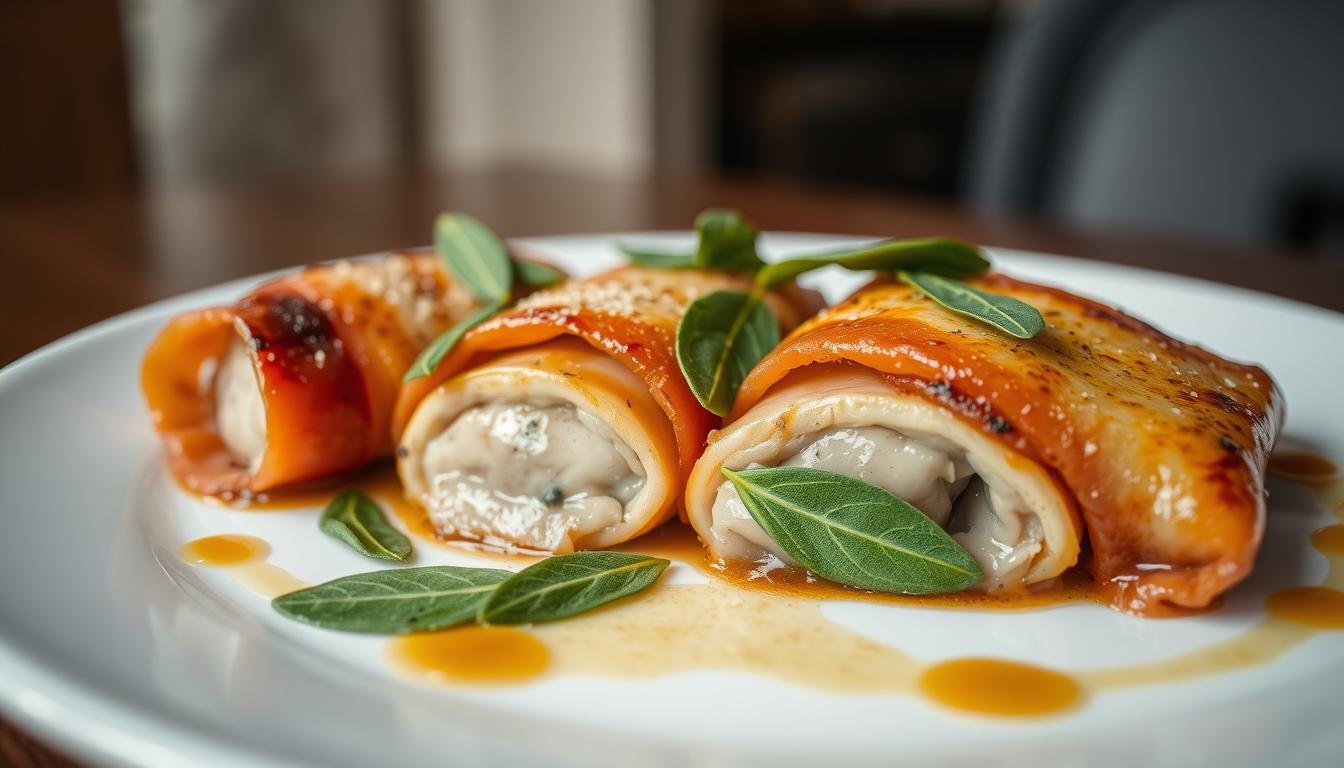
Saltimbocca: Veal Wrapped with Prosciutto and Sage
Ever curious about Saltimbocca in Italian cuisine? This classic dish is famous for its tender veal and tasty prosciutto. It’s a favorite in fancy restaurants for years.
Saltimbocca is more than food; it’s a taste of Italy’s rich food history. The mix of veal, prosciutto, and sage makes a dish that’s both fancy and welcoming.
Key Takeaways
- Understanding the history behind Saltimbocca
- Learning the key ingredients for an authentic Saltimbocca recipe
- A step-by-step guide to preparing Saltimbocca at home
- The significance of Saltimbocca in Italian cuisine
- Tips for serving Saltimbocca in an upscale setting
What is Saltimbocca?
Saltimbocca, which means “jump in the mouth,” is a true Italian culinary gem. It’s a simple yet powerful dish. It combines a few top-notch ingredients for a memorable taste experience.
https://www.youtube.com/watch?v=kOItbPEP7JE
Origin and History
Saltimbocca comes from Italy, in the Lombardy region. It’s been a favorite there for centuries. The name “Saltimbocca” means “jump in the mouth,” showing how it surprises and pleases your taste buds.
Key Ingredients
The magic of Saltimbocca is in its simplicity. It uses just a few essential ingredients: veal, prosciutto, and sage. Thin slices of veal are wrapped with prosciutto and a sage leaf, then cooked to perfection.
- Veal: The main protein, veal should be high quality and thin.
- Prosciutto: This cured ham adds a salty, savory taste.
- Sage: Fresh sage leaves add a herbaceous flavor that goes well with the veal and prosciutto.
Culinary Significance
Saltimbocca is more than a dish; it’s a symbol of Italian cooking tradition. It shows how Italians can turn simple ingredients into a masterpiece. This makes it a favorite globally.
As a traditional Italian dish, Saltimbocca is known worldwide. It’s often found in fancy restaurants. Its fame comes from the perfect mix of flavors and its elegant look.
How to Prepare Saltimbocca
Saltimbocca, a classic Italian veal dish, is easy to make at home. It uses simple ingredients but looks elegant. This gourmet meat dish is a favorite in Italian cuisine.

Step-by-Step Instructions
To begin, pound the veal cutlets thin. This makes them cook evenly and stay tender. It’s a key step for the dish’s texture.
Then, wrap each veal cutlet with prosciutto and a sage leaf. The prosciutto adds a salty flavor, and the sage brings a hint of earthiness. These flavors are key to Saltimbocca’s taste.
- Season the veal with salt and pepper.
- Dredge the wrapped veal cutlets lightly in flour, shaking off any excess.
- Sear the Saltimbocca in a hot skillet with butter until golden brown on both sides.
- Finish cooking the dish with white wine, allowing the sauce to reduce slightly and intensify in flavor.
Essential Cooking Tips
Using high-quality ingredients is crucial for great Saltimbocca. Choose fresh sage, thinly sliced prosciutto, and tender veal cutlets.
Don’t overcook the veal. Saltimbocca should be cooked just until the veal is done. Overcooking can make it dry and tough.
Lastly, serve Saltimbocca immediately after cooking. Garnish with additional sage if you like. This helps keep the flavors and textures fresh.
Choosing the Right Veal
The quality of veal is key to a great Saltimbocca. The type and quality of veal used can greatly impact the dish.
Types of Veal Cuts
For Saltimbocca, choose a tender veal cut. Veal cutlets or scallopine are the best options. These cuts come from the leg or rib area and are tender and fine.
- Veal Cutlets: Thinly sliced veal cutlets are perfect for Saltimbocca. They cook quickly and evenly.
- Veal Scallopine: Similar to cutlets, veal scallopine is tender. It works well when wrapped with prosciutto and sage.
Sourcing Quality Meat
Finding high-quality veal is important. Look for “gourmet meat” or “premium veal” labels. Buying from reputable butchers or suppliers is also wise.
Tips for Sourcing:
- Choose veal with a fine texture and a pale pink color.
- Opt for veal that is well-trimmed and has minimal connective tissue.
- Consider purchasing veal from local farms or butchers who specialize in gourmet meat.

By picking the right veal and getting it from quality suppliers, your Saltimbocca will be delicious and authentic.
The Perfect Prosciutto
Making Saltimbocca is all about picking the right prosciutto. Prosciutto, a key Italian cured ham, adds a salty, savory taste. It’s crucial to choose prosciutto based on its curing process and meat quality.
What to Look For
For Saltimbocca, pick prosciutto cured for at least 12 months. This long curing time brings out deeper flavors. Also, choose thin slices for easy wrapping around the veal.
Key characteristics to look for include:
- A delicate, salty flavor
- A tender, not too chewy texture
- A rich, savory aroma

Popular Brands to Consider
Top brands for Saltimbocca prosciutto are Parma and San Daniele. These brands use traditional methods for better flavor and texture.
Parma prosciutto has a sweet and salty taste, cured for 12 months. San Daniele prosciutto is known for its delicate flavor and soft texture.
The Role of Sage in Saltimbocca
Sage is a key herb in the Italian dish Saltimbocca. It’s not just for flavor but also balances the taste of veal and prosciutto. This makes the dish taste great together.
The type of sage used can change how Saltimbocca tastes. There are many types of sage, each with its own taste.
Types of Sage to Use
Common sage (Salvia officinalis) is the top choice for Saltimbocca. It has a strong flavor and smell. Other sages like Purple Sage or Golden Sage can also be used. They give the dish a different taste.
Fresh sage is best for Saltimbocca, but dried sage works too when fresh is not available. But use dried sage carefully because it’s stronger.
Harvesting Fresh Sage
Harvesting fresh sage is easy if you have sage plants. The best time is in the morning, after the dew but before it gets hot. Just cut off the leaves you need with scissors, leaving enough for the plant.

Using fresh sage makes Saltimbocca taste better and smell amazing. It’s a great choice for any cook, whether you’re experienced or just starting out.
Cooking Techniques for Saltimbocca
To get the most out of Saltimbocca, mastering cooking techniques is key. This Italian dish is famous for its delicate taste and soft texture. It needs careful cooking to reach perfection.
Pan-Searing vs. Grilling
There are two main ways to cook Saltimbocca: pan-searing and grilling. Pan-searing cooks the veal in a hot skillet with a little oil. It makes the outside crispy and keeps the inside tender. This method creates a rich, caramelized crust that boosts the veal’s flavor.
Grilling gives Saltimbocca a smoky taste, which goes well with the prosciutto and sage. Grilling needs precision to avoid overcooking the veal. But done right, it adds a nice contrast in texture and taste.

Common Mistakes to Avoid
Cooking Saltimbocca is simple, but there are traps to avoid. One big mistake is overcooking the veal, making it tough and dry. It’s important to cook it just right.
- Not pounding the veal cutlets thin enough, which can lead to uneven cooking.
- Using too much prosciutto or sage, overpowering the delicate flavor of the veal.
- Not letting the veal rest after cooking, resulting in juices that run out when the meat is sliced.
Avoiding these mistakes and picking the right cooking method can make your Saltimbocca dish both tasty and tender. It will show off the best of this gourmet veal dish.
Pairing Saltimbocca with Sides
Choosing the right sides is key to a complete meal. Saltimbocca, with its veal, prosciutto, and sage, goes well with many options. You can pick from vegetables, starches, and wines.
Recommended Vegetables and Starches
Several sides are great with Saltimbocca. Roasted veggies like asparagus, bell peppers, or zucchini add color and flavor. For starches, creamy mashed potatoes, risotto, or pasta with olive oil and herbs are good choices.
Here are some top vegetable picks:
- Roasted Asparagus: A classic Italian side that pairs well with the salty prosciutto.
- Sautéed Spinach: Quickly cooked with garlic, it provides a nutritious contrast.
- Grilled Bell Peppers: Sweet and slightly charred, they complement the savory veal.
| Side Dish | Description | Preparation Time |
|---|---|---|
| Mashed Potatoes | Creamy potatoes infused with garlic and parmesan | 20 minutes |
| Risotto | Arborio rice cooked with white wine and stock, finished with parmesan | 30 minutes |
| Pasta with Herbs | Lightly tossed pasta with olive oil, parsley, and basil | 15 minutes |
Wine Pairings
Choosing the right wine can make your meal better. For Saltimbocca, a dry white wine like Pinot Grigio or Vermentino is best. These wines match the herbal sage and the veal’s delicate taste.
Here are some great wine choices:
- Pinot Grigio: Crisp and refreshing, it pairs well with the light flavors of Saltimbocca.
- Vermentino: With its herbaceous notes, it complements the sage in the dish.
- Chianti: For those who prefer red wine, a light Chianti can pair nicely with Saltimbocca.

Serving Suggestions
How you present Saltimbocca can make your meal unforgettable. A beautifully set dish not only tastes great but also looks amazing.
Presentation Tips
To make Saltimbocca look good, follow these tips:
- Choose a clean, white plate to highlight the dish.
- Add fresh sage leaves and a bit of prosciutto on top.
- Place the veal cutlets neatly, without any overlap.

Adding a sauce, like a white wine and butter mix, can make it look even better. Drizzle it around the veal for color and moisture.
Meal Ideas
Saltimbocca can be the main attraction in many meals. Here are some ideas:
- Pair it with roasted veggies like asparagus or Brussels sprouts for a complete meal.
- Try it with creamy mashed potatoes or risotto for a cozy dinner.
- Match it with a simple green salad and a light vinaigrette for a fresh contrast.
For a special event, serve Saltimbocca with fine wines. A dry white wine, like Pinot Grigio, goes well with it.
Variations of Saltimbocca
Saltimbocca, a traditional Italian dish, has seen many changes over time. The classic recipe is still loved, but modern chefs and home cooks have added their own twists. This makes it a dish that everyone can enjoy, no matter their taste.
Creative Twists on the Classic
Some people use chicken or pork instead of veal. Others try different prosciutto or sage recipes. For example, using applewood-smoked prosciutto can give the dish a deep, savory taste. Gourmet meat suppliers offer premium ingredients like prosciutto wrapped veal to enhance the dish.
Regional Differences
In Italy, different regions have their own Saltimbocca recipes. Some add mushrooms or white wine, showing off local cooking styles. Knowing these regional differences can help cooks create their own unique Saltimbocca, adding a personal touch to the classic prosciutto wrapped veal recipe.