Trail Running: Challenge Yourself on Numerous Paths & Trails
Are you ready to leave behind the usual road running and start an exciting journey on different terrains and beautiful landscapes?
Trail running is a special way to test your limits and bond with nature. It’s a thrilling activity for both newbies and experienced runners. You’ll love the thrill of tackling rough trails, climbing up hills, and running on stunning paths.
Key Takeaways
- Discover the thrill of trail running and its unique challenges.
- Learn the basics of trail running to get started.
- Explore the benefits of trail running for physical and mental well-being.
- Understand how to prepare for trail running adventures.
- Find out how trail running can enhance your overall running experience.
What is Trail Running?
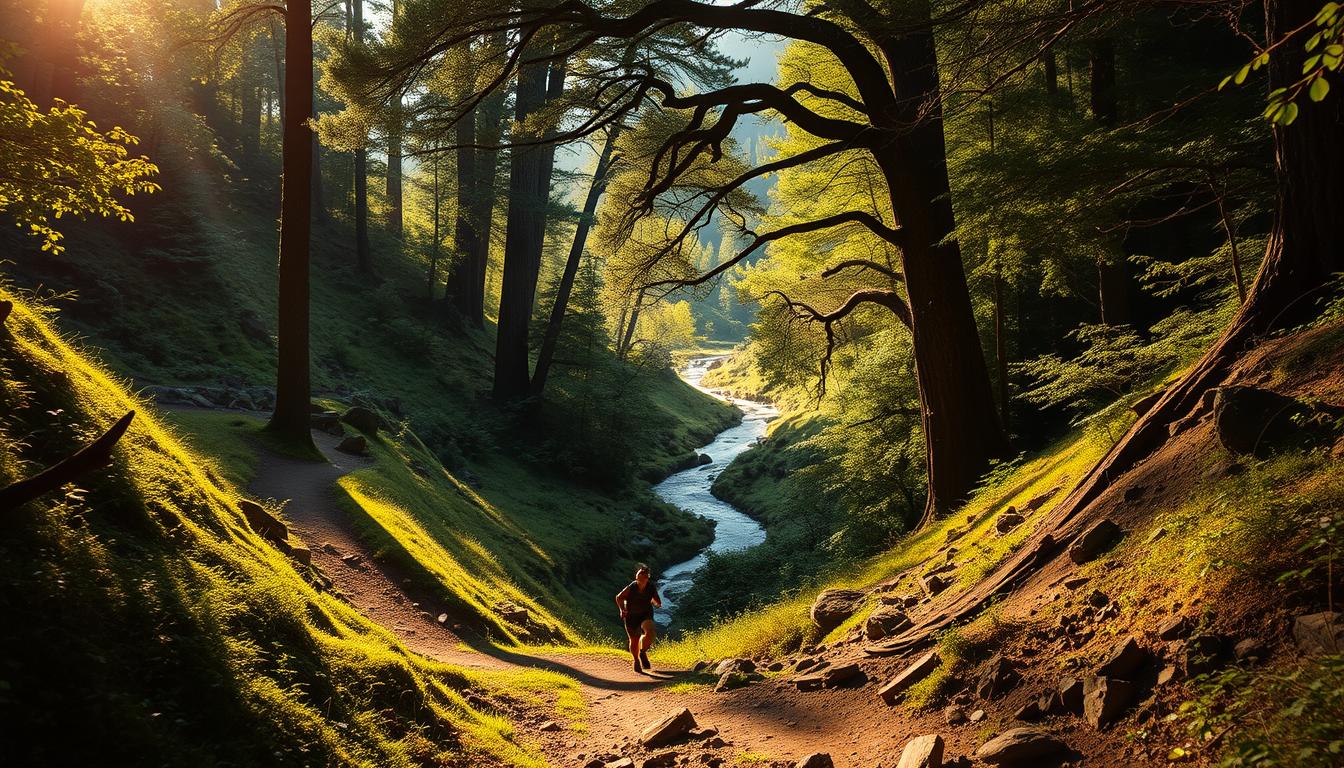
Trail running is an exciting way to test yourself on different paths and trails. It combines physical exercise with a deep connection with nature. Runners explore trails in places like forests, mountains, and hills. These paths are unlike the usual roads runners are used to.
The Basics of Trail Running
Trail running features varied terrain, including uneven paths, hills, and obstacles. Runners face challenges like navigating dense foliage or climbing steep hills. They need to be ready for these obstacles.
- Understanding the terrain: Trails can vary significantly, from smooth, dirt paths to rugged, rocky terrains.
- Adapting to elevation changes: Trail running often involves significant uphill and downhill sections, requiring different techniques and endurance.
- Being aware of the environment: Trail runners need to be mindful of their surroundings, including wildlife and changing weather conditions.
Difference Between Trail Running and Road Running
The main difference between trail running and road running is the terrain. Road running happens on paved roads, while trail running takes place on natural trails. This change affects the running experience, including physical demands and techniques needed.
Key differences include:
- Terrain difficulty: Trails are generally more challenging due to uneven surfaces, obstacles, and elevation changes.
- Running technique: Trail running requires a different technique, with more emphasis on agility, balance, and adapting to varying terrain.
- Mental challenge: The unpredictability of trail running can make it more mentally demanding than road running.
For those interested in trail running races, understanding these differences is crucial for training for trail running.
Benefits of Trail Running
Trail running does more than just keep you fit. It improves your overall well-being in many ways. It’s a journey that boosts your physical, mental, and emotional health.
Physical Benefits
Trail running is great for your body. It makes your legs and core stronger because of the varied terrain. Increased strength and endurance are common benefits, making you more fit than road runners.
The trails also help improve balance and coordination. This reduces the chance of getting hurt. Plus, it’s good for your heart and blood flow.
Mental Health Boost
Trail running is good for your mind too. It combines exercise with nature, which lowers stress and boosts mood. Trails offer a peaceful break from everyday life.
Completing tough trails or reaching running goals boosts self-esteem and confidence. It makes you feel proud and helps you grow.
Connection with Nature
Trail running lets you connect with nature. Trails take you through forests, streams, and mountains. This connection is grounding and fulfilling.
It also makes you appreciate the outdoors more. Trail runners often live more sustainably and care more for the environment.
Finding the Right Trail
Starting a trail running journey means finding trails that match your taste and skill. The U.S. has many trails to choose from. It’s key to know what each trail offers.
Terrain Types Explained
Trail running terrains differ a lot. You might run on smooth paths or tough mountain trails. Knowing these differences helps pick the right trail for you.
- Easy Trails: Smooth, well-kept paths for beginners or those wanting a calm run.
- Moderate Trails: Paths with some rough spots, like roots or rocks, for those with some experience.
- Challenging Trails: Tough terrains with steep hills, technical parts, and dangers, for seasoned runners.
Popular Trail Running Locations in the U.S.
The U.S. has many great places for trail running. Some top spots include:
- The Appalachian Trail, running through the east, with varied terrains and views.
- The Rocky Mountains, offering tough trails and stunning views.
- The Pacific Crest Trail, from California to Washington, known for its wide range of landscapes.

Apps and Resources for Trail Finding
Today, many apps and websites help find new trails. Some favorites are:
- Trail running apps like AllTrails and TrailLink, offering trail details, difficulty levels, and reviews.
- Online forums and communities, where runners share trail tips and advice.
- Local running clubs, which plan group runs and share the best local trails.
Using these tools, runners can find trails that suit their needs and improve their runs.
Essential Gear for Trail Running
The right equipment is key for trail running. It affects your comfort, safety, and how well you perform. The right gear makes your trail running better.
Running Shoes for Trails
Trail running shoes offer better grip, protection, and stability. Look for shoes with aggressive tread patterns for traction. Also, find shoes with protective features like toe caps and a comfortable fit to avoid blisters.

Clothing Best Suited for Trail Runs
Choosing the right clothes is crucial for comfort and performance. Go for breathable and moisture-wicking fabrics to keep you cool and prevent chafing. Dress in layers to adjust to weather changes.
Safety Gear to Consider
Safety is a top concern for trail runners. Carry headlamps or flashlights for visibility in the dark. Also, have a first aid kit for minor injuries and an emergency whistle to signal for help.
| Gear | Description | Importance Level |
|---|---|---|
| Trail Running Shoes | Designed for grip, protection, and stability on trails | High |
| Breathable Clothing | Moisture-wicking fabrics for comfort and temperature regulation | High |
| Headlamps/Flashlights | Provides visibility in low-light conditions | Medium |
| First Aid Kits | For treating minor injuries on the trail | Medium |
| Emergency Whistles | For signaling help in emergency situations | Low |
Trail Running Techniques
Trail running is more than just running long distances. It requires mastering specific techniques for different landscapes. Whether you’re running on rocky paths or through dense forests, the right techniques can greatly improve your performance and enjoyment.
Proper Running Form
Keeping the right running form is key for efficient trail running. This means keeping your back straight, engaging your core, and landing on your midfoot or forefoot. Good form helps prevent injuries and saves energy.
- Keep your eyes on the trail ahead, focusing on the path rather than the ground immediately in front of you.
- Use your arms for balance, keeping them slightly away from your body.
- Take shorter strides on technical terrain to maintain control and stability.
Uphill and Downhill Strategies
Trail running often includes steep inclines and declines. Uphill running is different from running on flat ground. Keep your weight forward, use your arms to push you up, and take shorter strides for steep inclines.

Downhill running requires control and caution. Keep your center of gravity over your feet, take shorter strides, and land softly on your feet. Stay relaxed and let gravity help you descend, but be ready to react to trail changes.
For training for trail running, include uphill and downhill segments in your runs. This will improve your technique and build strength and endurance.
Preparing for a Trail Run
As a trail runner, getting ready is essential for a great time on the trails. Good preparation boosts your performance and keeps you safe.
Setting Goals for Your Trail Run
Setting realistic goals is key for a fulfilling trail run. Whether you’re new or experienced, clear goals keep you motivated. Your goals might be to run a certain distance, beat your time, or just enjoy the view.
To set effective goals, consider the following:
- Assess your current fitness level.
- Choose a trail that suits your goal.
- Plan your training schedule.
Hydration and Nutrition Tips
Hydration and nutrition are crucial for trail running. They affect how well you perform and recover. A hydrated body works better, and the right food gives you energy.
| Nutrition Tips | Hydration Tips |
|---|---|
| Eat complex carbs for lasting energy. | Drink water before, during, and after running. |
| Include protein-rich foods for muscle recovery. | Watch your urine color to check if you’re hydrated. |
| Avoid big meals before running. | Try electrolyte drinks for long runs. |

By paying attention to these tips, you can make your trail run better. It will be fun and rewarding.
Trail Running Events and Competitions
Trail running fans have many events to choose from across the U.S. These races are for all levels, from newbies to pros. They happen in stunning, tough places all over the country.

Popular Trail Running Races in the U.S.
The U.S. has many trail races. They differ in distance, terrain, and how steep they are. Here are some favorites:
- The Western States Endurance Run, known for its challenging 100-mile course through the Sierra Nevada mountains.
- The Hardrock Hundred Mile Endurance Run, which takes runners through the rugged San Juan Mountains in Colorado.
- The Ultra-Trail Mt. Tamalpais, a 26.2-mile race with over 6,000 feet of elevation gain in California.
These races are tough but offer amazing views. They also bring runners together in a special way.
How to Train for a Trail Race
Training for a trail race needs a smart plan. You should build endurance, get used to different terrains, and do strength exercises. Here are some tips:
- Build Endurance: Slowly add more miles each week. Do long runs on weekends to get ready for the race.
- Terrain-Specific Training: Find trails that are like the race. Practice on hills, technical trails, and different heights.
- Strength Training: Do exercises that strengthen your core, legs, and glutes. This will make you run better and stay injury-free.
By working on these areas, you’ll be ready for a trail race. You’ll also enjoy the journey.
Trail Running Etiquette
Trail running etiquette is key to keeping our trails beautiful and enjoyable for everyone. As more people start trail running, it’s vital to know and follow good trail manners.

Respecting Nature and Wildlife
Respecting nature and wildlife is a big part of trail running etiquette. Runners should stay on the trails to prevent erosion and protect plants. It’s also important to be aware of wildlife and not disturb them or their homes.
Best practices for respecting nature include:
- Not littering and properly disposing of waste
- Avoiding sensitive habitats and staying on marked trails
- Not feeding or approaching wildlife
Trail Sharing: Guidelines for Runners and Hikers
Trail sharing is crucial, as trails are used by many, including hikers and bikers. Runners need to be aware of their surroundings and give way to others when needed.
Guidelines for trail sharing include:
- Announcing your approach to other trail users
- Yielding to uphill traffic and hikers
- Being mindful of your speed and surroundings
By following these guidelines, trail runners can help make the trail a positive place for everyone.
Building a Trail Running Community
Joining a trail running community can change your game. It offers motivation and camaraderie on the trails. Being part of a community that loves trail running as much as you do can make your experience better. You’ll learn from others, gain new insights, and stay motivated.
Connecting with fellow trail runners is easy by finding local clubs. These clubs host group runs, training sessions, and social events. To find a club, search online, check social media, or visit local running stores.
Finding Local Trail Running Clubs
Local clubs are great for runners of all levels. They’re a place to meet new people, learn about trails, and join organized runs. Many clubs also offer training and workshops to improve your skills.
To find a club near you, try these resources:
- Online search: Look for trail running clubs in your area.
- Social media: Many clubs are on Facebook and Meetup.
- Local running stores: Ask about groups at stores that sell running gear.
Participating in Group Runs
Group runs are a great way to stay motivated and learn from others. They offer a supportive environment to challenge yourself, get feedback, and enjoy running with others.
When joining a group run, be mindful of your pace and respect the group. Here are some tips:
| Tip | Description |
|---|---|
| Start with a group that matches your fitness level | Run with people who have a similar pace or slightly faster to challenge you. |
| Be respectful of others | Follow trail etiquette, stay to the right when passing, and be aware of your surroundings. |
| Communicate with the group | Let others know if you’re struggling or need to stop. Communication is key for a safe and enjoyable run. |
By joining local clubs and participating in group runs, you become part of the trail running community. This makes your running experience better and provides a supportive network to help you reach your goals.

Trail running workouts are more fun and effective with a community. You can share tips, learn new techniques, and stay motivated together.
Trail Running Challenges to Consider
As trail runners get more experience, they look for bigger challenges. These include long-distance and multi-day trail running events. These challenges need not just physical strength but also mental toughness and careful planning.
Long-distance trail running is a thrilling challenge for those who want to push their limits. It means running far beyond the usual marathon distances. Runners face tough terrains and must be ready with the right trail running gear. This includes strong shoes, hydration packs, and food plans for long runs.
Long-Distance Trail Running
Long-distance trail running asks for a lot of endurance and stamina. Start by slowly increasing your running distance. Also, add strength training to get ready for different terrains.
- Build endurance with gradual mileage increase
- Incorporate strength training for resilience
- Practice with the right trail running gear

Multi-Day Trail Challenges
Multi-day trail challenges are a big step up. They require camping, navigating, and staying energized for days. It’s not just about physical strength but also about planning and staying mentally strong.
For multi-day challenges, consider these:
- Plan and pack the right gear and supplies
- Get ready for different weather
- Make a nutrition plan for several days
Whether you’re running long distances or going on multi-day adventures, the right mindset and gear are key. Taking on these challenges can help you grow personally and connect more with nature.
Inspirational Trail Running Stories
The trails have seen many stories of change, bravery, and never giving up. Trail running pushes people to go beyond their limits, explore new places, and feel closer to nature. This section shares some of these stories, showing the journeys of trail runners and the changes they’ve experienced.
Interviews with Enthusiastic Trail Runners
We’ve talked to several trail runners who shared their inspiring stories. One is Alex Thompson, a trail runner from Colorado. He talked about going from casual running to running 100 miles. “Trail running has taught me resilience and humility,” Alex said. “The trails have a way of keeping you grounded and connected to what’s truly important.“
Lily Chen also shared her story. She started trail running to deal with stress and found a new purpose. “The solitude and challenge of trail running have been transformative for me,” Lily explained. “It’s not just about running; it’s about the journey, the people you meet, and the landscapes you witness.”
Transformative Experiences from the Trails
Trail running can change lives in many ways. It’s not just about the physical challenge but also about the mental and emotional journeys. Mark Davis, a veteran trail runner, talked about overcoming a serious injury through trail running. “The trails helped me heal, both physically and mentally,” Mark said. “It’s a journey that has taught me patience, persistence, and the value of small victories.”
- Discover new trails and terrains
- Build resilience and mental toughness
- Connect with a community of like-minded individuals
- Experience the transformative power of nature

Staying Safe While Trail Running
Trail running is exciting, but safety comes first. Always be ready for wildlife, bad weather, and tough terrain.
Recognizing Hazards
Stay alert to your surroundings. Look out for wildlife and know what to do if you meet animals. Wear the best trail running shoes for support and grip.
Planning Your Route
Tell someone where you’re going and when you’ll be back. This helps in emergencies. Know the trail map and carry a PLB or satellite phone in remote places.
With these steps, you can enjoy trail running safely. Whether you’re experienced or new, safety is key for a great run.