Savor the Flavors of Cured Meats: Prosciutto, Salami, and More
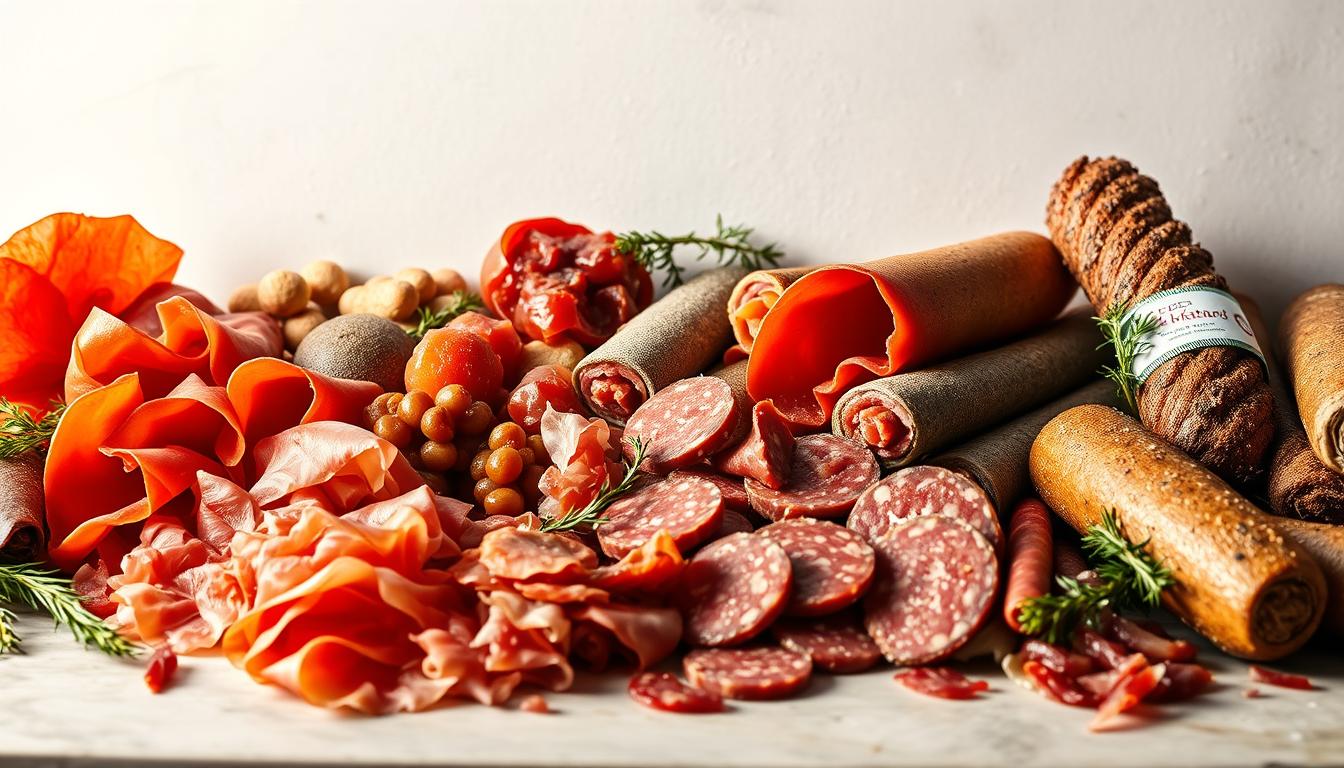
Are you ready to take your charcuterie to the next level with gourmet cured meats? The taste of prosciutto is delicate and salty. On the other hand, salami packs a bold, spicy punch. The world of cured meats is vast and exciting.
Cured meats are a big deal in many cuisines, like European and Italian. They come in different textures and flavors. These savory treats can make any meal or event more interesting.
Key Takeaways
- Discover the diverse world of gourmet cured meats.
- Learn about the unique characteristics of prosciutto and salami.
- Explore the various uses of cured meats in different cuisines.
- Understand the appeal of cured meats in modern culinary culture.
- Find inspiration for incorporating cured meats into your meals.
What Are Cured Meats?
The art of curing meat has been around for centuries. Different cultures have developed their own ways and recipes. Today, cured meats are a big part of many cuisines, offering a wide range of tastes and textures.
Understanding the Curing Process
The curing process uses salt, sugar, and other ingredients to keep meat fresh and add flavor. This old method has evolved, with each region having its own way of curing.
Key steps in the curing process include:
- Selecting the right cuts of meat
- Applying a curing mixture
- Allowing the meat to cure for a specified period
- Monitoring the curing process to achieve the desired flavor and texture
Different Types of Cured Meats
Cured meats come in many forms, each with its own special taste and texture. Some favorites include:
- Prosciutto: A cured ham from Italy, known for its delicate flavor and tender texture.
- Salami: A cured sausage from Europe, often seasoned with garlic and spices.
- Chorizo: A spicy cured sausage from Spain and Portugal, adding a bold flavor to dishes.
Regional cured meats, like those found in European charcuterie, show the variety of curing traditions. From the air-dried meats of the Mediterranean to the smoked meats of Eastern Europe, each region has its own unique take on cured meats.
Highlighting Prosciutto
Prosciutto comes from Italian tradition and has won the hearts of food lovers everywhere. It’s more than a food; it shows Italian culture and curing art.
Prosciutto di Parma and Prosciutto di San Daniele are famous for their making. They cure and age for up to 24 months. This makes their distinctive flavor and velvety texture special.
What Makes Prosciutto Special?
Several things make prosciutto unique:
- The pork legs used are from heritage breeds.
- The curing process uses salt and time to remove moisture.
- The aging process gives it its unique taste.

Pairing Prosciutto with Flavors
Prosciutto is great with many foods. Here are some favorite pairings:
- Fruit and Cheese Boards: Try it with melon, figs, or grapes for a classic taste.
- Pasta and Pizza: Add it to pasta or pizzas for a salty, savory touch.
- Salads: Mix prosciutto into green salads or use it as a crunchy topping.
Trying different pairings can make your cooking better. Prosciutto becomes a key ingredient in your kitchen.
An In-Depth Look at Salami
The world of salami is vast and varied. Different cultures add their unique twist to this classic cured meat. Salami, a staple in Italian cured meats, has gained popularity worldwide for its rich flavors and versatility.
Varieties of Salami
Salami comes in numerous varieties, each with its distinct flavor profile and texture. Some of the most well-known types include:
- Italian Salami: Known for its garlicky flavor and firm texture.
- Spanish Salami (Chorizo): Often spicy, with a smoky flavor.
- Hungarian Salami: Typically made with paprika, giving it a distinctive taste.
These varieties showcase the diversity of salami, making it a fascinating cured meat to explore.

How Salami Is Made
The process of making salami involves a combination of traditional techniques and high-quality ingredients. The basic steps include:
- Selecting the meat: Typically, pork is used, but other meats like beef or venison can also be used.
- Mixing with spices: Various spices and herbs are added to give salami its characteristic flavor.
- Curing: The mixture is then cured with salt or sugar to preserve the meat and enhance the flavor.
- Fermentation: The salami is left to ferment, allowing the development of its distinctive taste.
- Aging: Lastly, the salami is aged, which concentrates the flavors and textures.
Artisanal salami makers often have their secret recipes and techniques, making each salami unique. The result is a cured meat that is not only delicious on its own but also pairs well with a variety of foods, from cheeses to crackers.
By understanding the different varieties of salami and the process involved in making it, one can truly appreciate the craftsmanship behind this beloved cured meat.
Exploring Other Cured Meats
Prosciutto and salami are famous, but there’s more to discover. Bresaola, capicola, and chorizo offer unique tastes and textures. They add depth to dishes and enhance culinary adventures.
Bresaola: A Unique Taste
Bresaola is an air-dried, salted beef from Italy. It’s tender and has a subtle flavor, often with spices and herbs. Served thinly, it’s great in salads, pasta, or on charcuterie boards.

Capicola: Flavor Packed in Every Slice
Capicola, or coppa or gabagool, comes from Italian-American pork shoulder or neck. It’s seasoned with spices like black pepper and coriander. Aged and cured, it’s tender and flavorful, perfect for sandwiches or platters.
Chorizo: Spicy Delight
Chorizo is a spicy, smoked Spanish or Mexican cured sausage from pork. The Spanish version has smoked paprika, while Mexican chorizo has chili peppers. It’s great in tapas, stews, or on pizza.
| Cured Meat | Origin | Main Ingredients | Flavor Profile |
|---|---|---|---|
| Bresaola | Italy | Beef | Tender, subtly spiced |
| Capicola | Italy/USA | Pork shoulder/neck | Flavorful, slightly spicy |
| Chorizo | Spain/Mexico | Pork | Spicy, smoked |
These regional cured meats add variety and tradition to meals. Exploring them can make your cooking more exciting and introduce new favorites.
Health Benefits of Cured Meats
Cured meats like prosciutto and salami are not just tasty. They also have health benefits that make them good for a balanced diet. They are packed with nutrients.
Protein and Essential Nutrients
Cured meats are full of protein, which is key for muscle repair and growth. They also have vitamins and minerals like iron and zinc. Iron helps carry oxygen in the blood, and zinc is important for the immune system and healing wounds.
These meats are also rich in B vitamins, like B12. B12 is crucial for nerve health and making red blood cells. This makes cured meats a good choice for getting important vitamins and minerals.
| Nutrient | Benefit | Example Cured Meats |
|---|---|---|
| Protein | Muscle repair and growth | Prosciutto, Salami |
| Iron | Oxygen transport in blood | Chorizo, Bresaola |
| Zinc | Immune function and wound healing | Capicola, Salami |
Low Carb Options
Cured meats are low in carbs, making them great for low-carb diets. They can be enjoyed alone or with low-carb foods like veggies and cheeses. This makes for a healthy and tasty snack.
For those on a ketogenic diet or low-carb lifestyles, cured meats like prosciutto and chorizo are a tasty and nutritious choice. They offer fats and proteins without too many carbs.

Serving Cured Meats: Tips and Ideas
The art of serving cured meats is more than just putting them on a platter. It’s about creating a memorable experience. Whether you’re hosting a party or just want a tasty snack, cured meats are a great choice.

Ideal Pairings for Charcuterie Boards
Building a charcuterie board is an art that balances flavors and textures. Start with a variety of cured meats like Prosciutto, Salami, and Chorizo. Add cheeses like soft brie and sharp cheddar for depth. Include fresh fruits like grapes and figs, and nuts like almonds for crunch.
Remember to add crackers or bread slices as a base. This will help hold everything together.
- Choose a mix of soft and hard cheeses.
- Add fresh or dried fruits for a sweet contrast.
- Incorporate nuts or pickles for added texture.
- Use a variety of crackers and breads.
Creative Snack Ideas
Cured meats can be the highlight of many snacks. Try pairing Prosciutto with melon for a refreshing summer snack. For something more filling, make a cured meat sandwich with your favorite bread and condiments.
You can also wrap Salami around cheese or breadsticks for a quick snack.
- Prosciutto and melon for a light snack.
- Cured meat sandwiches with unique condiments.
- Salami wrapped around cheese or breadsticks.
By using these tips and ideas, you’ll impress your guests and enhance your culinary experience. The rich flavors of cured meats will make your gathering unforgettable.
Popular Brands of Cured Meats in the U.S.
In the U.S., you can find many authentic cured meats. From small producers to big brands, there’s a lot to choose from. Each brand offers its own quality and style.
Artisanal producers focus on detail and traditional methods. They make unique, complex flavors that fans love.
Artisanal Producers to Watch
Some small producers stand out for their cured meats. Volpi Salumeria is famous for its artisanal salami. Applegate is known for organic and natural options.
- Volpi Salumeria: Known for their handcrafted salami and other cured meats.
- Applegate: Offers organic and naturally produced options.
- Creminelli: Specializes in handcrafted, small-batch cured meats.

Recognized National Brands
Big brands also offer quality cured meats. Salumeria Bianco and La Quercina are known for their Italian-style meats. They keep quality high even as they grow.
These brands are easy to find and promote cured meats. They help more people enjoy these products.
- Salumeria Bianco: Authentic Italian-style cured meats.
- La Quercina: Known for their prosciutto and other Italian specialties.
- Salami Milano: Offers a variety of salami and other cured meats.
Whether you prefer small producers or big brands, the U.S. has a lot to offer. You can find many flavors and products to suit your taste.
Choosing Quality Cured Meats
Choosing the best cured meats needs some knowledge and care. There are many options out there. Knowing what makes a cured meat special is key for fans.
Tips for Selecting the Best Products
Several things matter when picking cured meats. First, think about the origin. Meats from famous places like Italian Prosciutto di Parma or Spanish Jamón Ibérico are often top-notch. This is because of their traditional making and strict quality checks.
Also, look at the ingredients. The best cured meats have few ingredients, like meat, salt, and sometimes wine or spices. Stay away from products with too many preservatives or fillers.
The production method is also important. Meats made by hand or using old methods often taste better and feel nicer. Choose products made in small batches or aged right.
Reading Labels: What to Look For
Understanding labels helps you make better choices. Here are some tips:
- Check for certifications like “USDA Organic” or “Non-GMO” if these are important to you.
- Look at the ingredient list to ensure it aligns with your preferences.
- Be aware of the sodium content, specially if you’re watching your salt intake.
- Some labels may indicate the product has been “hand-crafted” or “aged to perfection,” which can be indicators of quality.
To better understand the differences, let’s compare some popular cured meats:
| Cured Meat | Origin | Main Ingredients | Aging Process |
|---|---|---|---|
| Prosciutto di Parma | Italy | Pork leg, salt | Minimum 12 months |
| Jamón Ibérico | Spain | Ibérico pig leg, salt | At least 24 months |
| Salami | Various | Pork, garlic, salt, wine | Varies, typically several weeks to months |

By focusing on these details and knowing what to look for on labels, you can improve your cured meat experience. Enjoy the rich flavors and textures these products offer.
Cooking with Cured Meats
Cured meats are more than just snacks. They add flavor to many recipes. Whether it’s a quick dinner or a party dish, prosciutto and salami can make your meals special.
Delicious Recipes Featuring Cured Meats
Cured meats are very versatile. They’re great in pasta, salads, and even on pizzas. For example, a tasty Carbonara with Prosciutto combines prosciutto, eggs, parmesan, and pasta.
- Prosciutto and Arugula Pizza: Put tomato sauce, prosciutto, arugula, and mozzarella on a pizza crust for a tasty dinner.
- Salami and Cheese Wrap: Fill a tortilla with salami, cheese, lettuce, and your favorite sauce for a quick snack.
| Recipe | Main Ingredients | Difficulty Level |
|---|---|---|
| Carbonara with Prosciutto | Prosciutto, Eggs, Pasta, Parmesan | Easy |
| Salami and Cheese Wrap | Salami, Cheese, Lettuce, Tortilla | Very Easy |
| Prosciutto and Arugula Pizza | Prosciutto, Arugula, Tomato Sauce, Mozzarella | Moderate |

Incorporating Cured Meats into Everyday Dishes
Adding cured meats to your daily meals is easy. Try salami in sandwiches or prosciutto on breakfast eggs. The trick is to try different meats and recipes.
For a fancy meal, make a Charcuterie Board with various meats, cheeses, crackers, and garnishes. It’s great for parties and can be tailored to your taste.
Cured Meats Around the World
Cured meats are a big part of many cuisines worldwide. Each place has its own special way of making these meats. From Europe’s charcuterie to South America’s cured meats, the variety shows the diversity of cultures and traditions.
A Snapshot of Cured Meat Traditions
In Europe, Italy and France are famous for their cured meats. Products like prosciutto and salami are very popular. Spain’s chorizo and Italy’s Bresaola show how different curing methods can create unique flavors and textures.
Regional Variations and Characteristics
Local ingredients, climate, and culture shape regional cured meats. For example, Spanish chorizo is spicy, while Italian salami is mild. Exploring these differences gives us a peek into the rich history of cured meats. From American bacon’s smoky taste to European prosciutto’s delicate flavor, each has its own special qualities.