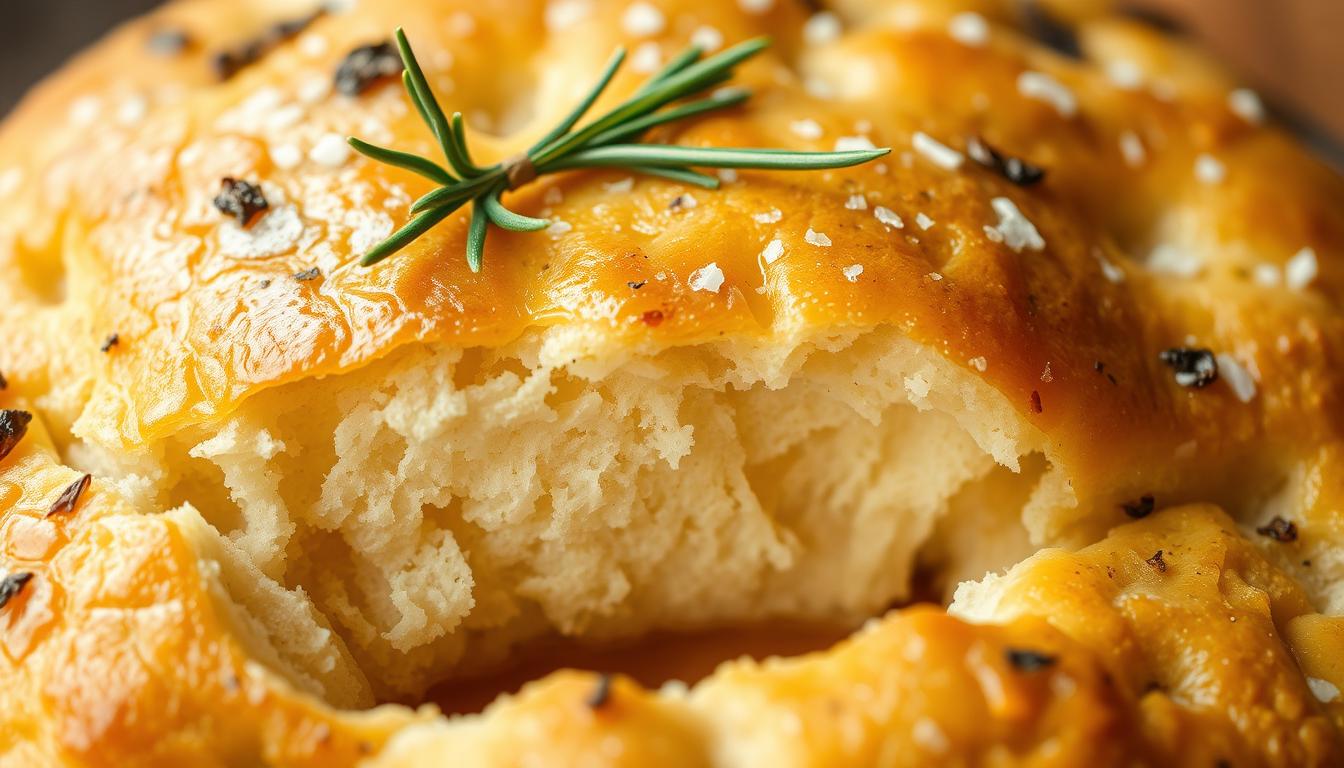
Focaccia: Olive Oil-Rich Bread, Sometimes Topped with Herbs or Salt
Are you ready to dive into the rich flavors of Italy? Can a simple bread be the key to a culinary journey? For many, the answer is yes, and it’s in focaccia. This Italian bread is loved for its soft texture and deep flavors.
Focaccia has been a key part of Italian food for centuries. It’s often served as a side or used in sandwiches. Its rich olive oil taste makes it a hit among bread lovers.
Key Takeaways
- Discover the rich history of focaccia and its significance in Italian cuisine.
- Learn how to make traditional focaccia at home with simple ingredients.
- Explore various types of focaccia and their uses in different meals.
- Understand the health benefits associated with consuming focaccia.
- Find out how to pair focaccia with other dishes for a perfect culinary experience.
What is Focaccia?
Focaccia has ancient roots and a long history. It’s a key part of Italian cuisine. It started as a simple flatbread cooked in a hearth.
A Brief History of Focaccia
Focaccia’s history goes back to ancient times. It was first made by the Italians, mainly in the Liguria region. It was a simple flatbread, often topped with olive oil, herbs, and cheese.
Over time, focaccia changed. It got new ingredients and cooking methods. Now, it’s the tasty bread we love today.
The name “focaccia” comes from the Latin “focus,” meaning hearth or fireplace. This bread was a staple and important in Italian culture.
Traditional Ingredients
Focaccia’s traditional ingredients are simple. They include olive oil, flour, yeast, water, salt, and herbs like rosemary or thyme. These ingredients create complex flavors in a well-made focaccia.
Key Ingredients and Their Roles:
| Ingredient | Role in Focaccia |
|---|---|
| Olive Oil | Enhances flavor and texture |
| Flour | Provides structure |
| Yeast | Facilitates rising |
| Herbs (e.g., Rosemary) | Adds aromatic flavor |
The Art of Making Focaccia
Making focaccia is an art. It involves mixing, kneading, and baking the dough. The dough is made from flour, yeast, water, and salt.
The kneading process is crucial. It makes the dough smooth and elastic. After kneading, the dough rises before being shaped and topped with olive oil and herbs.
The final step is baking the focaccia in a hot oven. It becomes golden brown and crispy. This results in a deliciously aromatic bread, perfect on its own or with other dishes.
Types of Focaccia
Focaccia comes in many flavors and textures, appealing to many. This Italian bread has changed over time. Different places and chefs have added their own special touches.
Classic Focaccia Variations
Classic focaccia is a key part of Italian food. It’s often topped with olive oil, herbs, or salt. Herb-topped focaccia is loved, with fresh or dried herbs like rosemary or thyme. Salty focaccia is also popular, with coarse salt for extra taste.

Regional Styles Across Italy
Italy has many focaccia styles, each with its own taste and texture. For example, focaccia di Genova is soft and mild. Focaccia di Altamura has a crisper outside and a stronger flavor.
| Region | Focaccia Style | Characteristics |
|---|---|---|
| Genova | Focaccia di Genova | Soft, pillowy texture, mild flavor |
| Altamura | Focaccia di Altamura | Crustier exterior, robust taste |
Unique Toppings to Try
While traditional focaccia is tasty, trying new toppings can make it even better. Add cherry tomatoes, olives, or prosciutto to make your own focaccia. There are countless options, leading to a delicious and satisfying snack.
- Cherry tomatoes for a burst of juicy sweetness
- Olives for a salty, savory flavor
- Prosciutto for a crispy, meaty texture
How to Make Focaccia at Home
With just a few ingredients and basic tools, you can make authentic Italian focaccia at home. It’s a simple process that includes mixing, kneading, and baking the dough.
Essential Tools and Equipment
To make focaccia, you’ll need some basic tools. You’ll need a large mixing bowl, measuring cups, a wooden spoon or dough whisk, a baking sheet with parchment paper, and an oven.
- A large mixing bowl for combining ingredients
- Measuring cups for accurate measurements
- A wooden spoon or dough whisk for mixing
- A baking sheet lined with parchment paper for baking
- An oven for baking the focaccia
Step-by-Step Recipe
Here’s a simple focaccia recipe to get you started:
- Combine 1 cup of warm water, 2 teaspoons of sugar, and 2 teaspoons of active dry yeast in a large mixing bowl. Let it sit for 5-10 minutes until the yeast is activated.
- Add 3 cups of all-purpose flour, 1 teaspoon of salt, and 2 tablespoons of olive oil to the bowl. Mix until a dough forms.
- Knead the dough on a floured surface for 5-10 minutes until it becomes smooth and elastic.
- Place the dough in a greased bowl, cover it with a damp cloth, and let it rise in a warm place for 1 hour, or until it has doubled in size.
- Preheat your oven to 425°F (220°C). Punch down the dough and transfer it to a baking sheet lined with parchment paper.
- Dimple the dough with your fingers, drizzle with olive oil, and sprinkle with your choice of toppings (such as rosemary, sea salt, or coarse salt).
- Bake the focaccia in the preheated oven for 15-20 minutes, or until it’s golden brown.

Tips for Perfecting Your Focaccia
To make the perfect homemade focaccia, follow these tips:
- Use high-quality ingredients, including fresh yeast and good olive oil.
- Avoid overworking the dough, as this can make the focaccia dense.
- Ensure your oven is at the right temperature to achieve a golden-brown crust.
- Don’t overcrowd the baking sheet, as this can affect the focaccia’s texture.
By following these steps and tips, you can create delicious Italian bread recipe focaccia at home. It’s perfect for sandwiches, dipping, or just enjoying on its own.
Focaccia Serving Suggestions
Focaccia, a bread rich in olive oil, offers endless serving options. It’s perfect for simple pairings or elaborate dishes. This Italian bread is versatile and delicious.
Perfect Pairings with Olive Oil
Pairing focaccia with high-quality olive oil is a classic choice. Drizzle the oil over the bread for a tasty side dish. Adding sea salt or herbs like rosemary or thyme can enhance the taste.
- Drizzle with extra virgin olive oil
- Sprinkle with sea salt
- Add fresh or dried herbs

Focaccia as a Sandwich Base
Focaccia is great for sandwiches because of its soft texture and rich flavor. You can fill it with cured meats, cheeses, vegetables, or a mix of these.
Some popular focaccia sandwich ideas include:
- Italian-style with salami and mozzarella
- Vegetarian with roasted vegetables and hummus
- Meat lovers with ham, turkey, and avocado
Focaccia for Appetizers and Dips
Focaccia is also perfect for appetizers or dippers. Cut it into bite-sized pieces or strips. Serve with olive oil, hummus, tapenade, or your favorite dip. It’s a tasty and easy snack or starter for gatherings.
Some dip suggestions to pair with focaccia include:
- Olive tapenade
- Roasted red pepper hummus
- Garlic and herb dip
By using focaccia in your meals or gatherings, you can enjoy its rich flavors and versatility. Whether as a side, sandwich base, or with dips, focaccia is always a hit.
Health Benefits of Focaccia
Focaccia is not just tasty; it can also be good for you. It’s all about the ingredients and how it’s made.

Nutritional Profile
Focaccia is made from flour, water, yeast, salt, and olive oil. The flour used can change its health benefits. Whole wheat flour adds more fiber than refined flour.
| Nutrient | Whole Wheat Focaccia | White Flour Focaccia |
|---|---|---|
| Calories | 120 per slice | 130 per slice |
| Fiber | 4g | 2g |
| Fat | 3g | 3.5g |
Olive Oil: A Heart-Healthy Choice
Olive oil is key in focaccia and is good for your heart. It’s full of monounsaturated fats. These fats can lower bad cholesterol.
Incorporating Focaccia into a Balanced Diet
To make focaccia healthier, use whole wheat flour and less olive oil. Adding veggies or lean proteins can boost its nutrition.
- Use whole wheat flour for more fiber.
- Reduce olive oil for lower calorie count.
- Add vegetables or lean proteins for extra nutrients.
Focaccia in Popular Culture
Focaccia is everywhere in popular culture, from cookbooks to social media. This Italian bread has become a key part of modern cooking.

Focaccia in Food Media
Focaccia is featured in many food media, like cookbooks, YouTube, and cooking shows. It’s loved for its taste and versatility. Cookbooks on Italian food often include focaccia recipes, showing how it can be topped and flavored in many ways.
- Cookbooks featuring focaccia recipes
- YouTube tutorials on making herb-topped focaccia
- Cooking shows highlighting salty focaccia variations
Famous Focaccia Chefs
Many famous chefs have made focaccia popular with their recipes and shows. Chefs like Giada De Laurentiis and Mario Batali have shared their focaccia recipes. They inspire home cooks to try new ingredients and methods.
- Giada De Laurentiis: Known for her Italian-inspired recipes, including a variety of focaccia dishes.
- Mario Batali: This celebrated chef has featured focaccia in his cooking shows, emphasizing its rustic charm and flavor.
Social Media Trends
Social media has made focaccia even more popular, with creative toppings and styles. From salty focaccia to sweet, social media is full of focaccia ideas.
- Instagram-worthy focaccia presentations
- Trending toppings and flavor combinations
- User-generated recipes and variations
Focaccia is a favorite baked good worldwide, not just in Italy. Its popularity in culture shows its lasting appeal and flexibility.
Focaccia Around the World
Focaccia, the quintessential Italian flatbread, has become a global phenomenon. It has traveled far beyond its Italian roots. Now, it adapts to local flavors and ingredients while keeping its olive oil richness.

International Twists on Focaccia
Different countries have put their own spin on focaccia. In Korea, it’s topped with spicy Korean chili flakes, known as gochugaru. This adds a bold and spicy kick. In Greece, it’s infused with Kalamata olives and feta cheese, giving it a distinctly Mediterranean flavor. In Mexico, it’s seasoned with cumin and chili powder, blending Italian and Mexican cuisines.
These international twists show the versatility of focaccia. They highlight its ability to complement a wide range of flavors. Whether it’s exotic spices, herbs, or other local ingredients, focaccia is a canvas for culinary creativity worldwide.
Focaccia in American Cuisine
In the United States, focaccia is a staple in many restaurants and households. It’s often used as a base for sandwiches, providing a soft and slightly crispy texture. It’s also commonly served as a side dish, accompanying soups, salads, and pasta dishes. Its popularity in American cuisine shows its adaptability and the growing interest in Italian food.
American bakeries and chefs have experimented with focaccia, introducing new toppings and flavors. From rosemary and sea salt to more innovative combinations like fig and prosciutto, the variations are endless. This creativity has helped focaccia maintain its appeal in a diverse culinary landscape.
Focaccia Festivals and Events
Focaccia has become a central feature in various food festivals and events around the world. These events celebrate the bread’s rich history and cultural significance. For example, in Italy, focaccia festivals are common, where locals gather to celebrate their culinary heritage. In the United States, food festivals frequently include focaccia-themed activities, showcasing its growing popularity.
These festivals not only promote focaccia but also bring communities together. They highlight the bread’s role in cultural and social gatherings. They provide a platform for bakers and chefs to share their creations and for attendees to experience the diverse world of focaccia.
Common Mistakes to Avoid
To make authentic Italian focaccia, avoid common mistakes. Making focaccia at home is fun, but knowing these pitfalls helps. You’ll make a tasty, homemade focaccia that wows everyone.
Overworking the Dough
One big mistake is overworking the dough. This makes focaccia dense and tough, unlike the soft, traditional version. Mix ingredients just until they stick together, then rest the dough. Overworking also builds too much gluten, making shaping hard.

Incorrect Baking Temperature
The baking temperature is key for focaccia. Too hot and the outside burns before the inside cooks. Too cool and it won’t rise or cook right. Make sure your oven is at the right temperature. A baking stone helps with even heat.
Not Using Enough Olive Oil
Olive oil is crucial for focaccia’s taste and texture. Without enough, the bread is dry and tasteless. Brush the dough well with olive oil before baking. Use a good olive oil bread recipe that highlights this.
| Mistake | Consequence | Solution |
|---|---|---|
| Overworking the Dough | Dense, tough focaccia | Mix ingredients just until they come together |
| Incorrect Baking Temperature | Burnt or undercooked focaccia | Ensure correct oven temperature; use a baking stone |
| Not Using Enough Olive Oil | Dry, flavorless focaccia | Generously brush dough with olive oil |
By avoiding these mistakes, you can make a delicious focaccia recipe. It will show off the best of this Italian bread. Happy baking!
Frequently Asked Questions About Focaccia
Focaccia is a tasty Italian bread that’s great at any time. It’s perfect from the moment it comes out of the oven to later on. People often wonder how to keep it fresh.
Storage and Shelf Life
Focaccia stays good for a few days if stored right. Keep it in an airtight container or plastic bag. It’s also great to freeze, making it easy to prepare ahead of time.
Freezing and Reheating
Yes, you can freeze focaccia. Just wrap it in plastic or foil and put it in a freezer-safe bag. To make it crispy again, thaw it at room temperature or reheat in the oven.
Best Storage Practices
For the best storage, keep focaccia in a cool, dry spot, away from sunlight. An airtight container or plastic bag keeps it fresh longer. This way, you can enjoy your focaccia for days.