Carpaccio: Thinly Sliced Raw Meat or Fish
Ever curious about Carpaccio in Italian cuisine? This gourmet dish is loved for its light flavors and fancy look. It’s a hit with food lovers for years.
Carpaccio comes from Italy and is more than food. It’s a special experience. With its many dressings and toppings, it takes you on a fancy food trip.
Key Takeaways
- Discover the origins of Carpaccio and its significance in Italian cuisine.
- Explore the health benefits associated with consuming Carpaccio.
- Learn various ways to prepare and serve Carpaccio for different occasions.
- Understand the versatility of Carpaccio in terms of ingredients and flavors.
- Find out why Carpaccio is considered a gourmet dish worldwide.
What is Carpaccio?
Carpaccio is a dish known for its elegance and simplicity. It’s made from thinly sliced raw meat or fish. This Italian delicacy is loved worldwide for its beauty and taste.
The way carpaccio is prepared can vary. But it usually involves slicing the main ingredient thinly. It’s then served with different dressings and sides.
The Origin of Carpaccio
The name “carpaccio” comes from the 16th-century Venetian painter Vittore Carpaccio. He was famous for his bold use of red and white colors. These colors remind us of the dish’s typical look.
The dish started in Italy as a new way to serve raw meat. Over time, its preparation has been shaped by many culinary traditions.
Traditional Ingredients
Traditionally, carpaccio uses high-quality raw ingredients. Beef carpaccio is made with thin slices of beef. It’s served with arugula, Parmesan cheese, and a lemon vinaigrette.
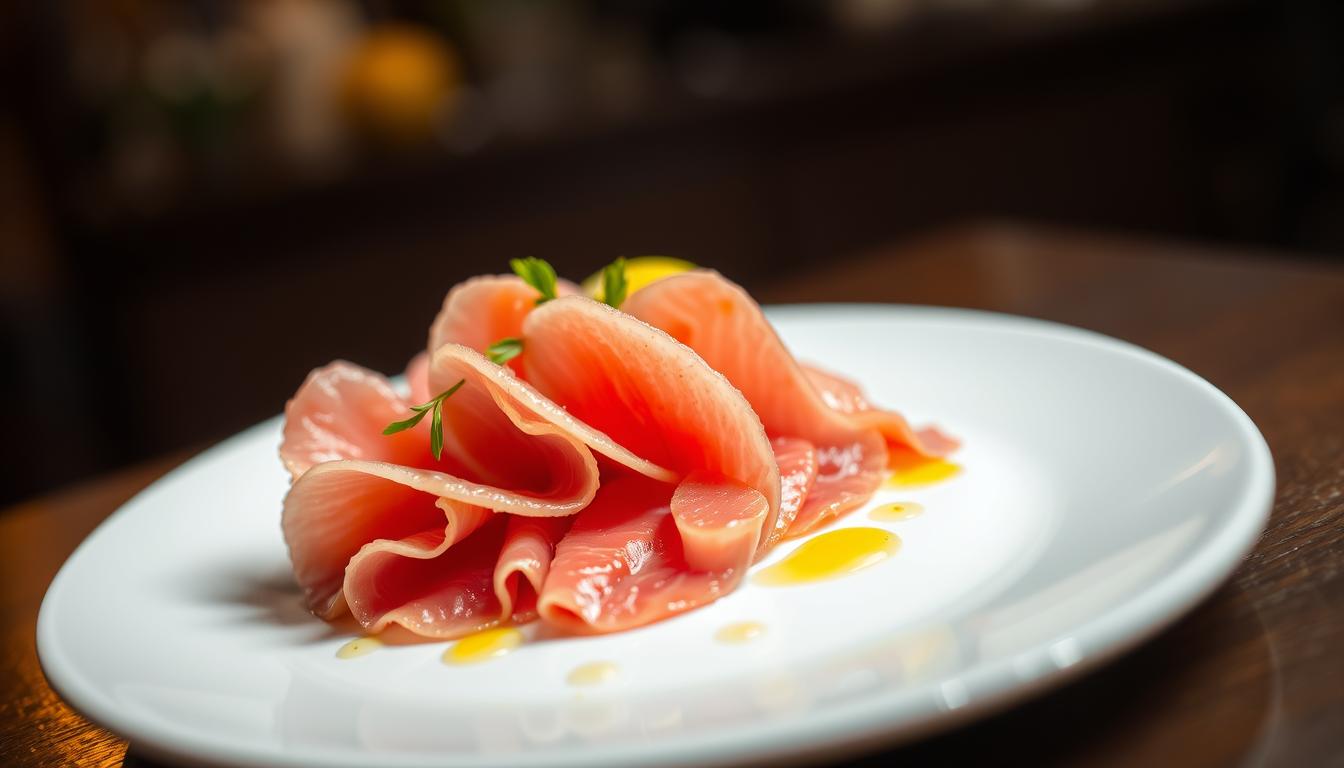
Fish carpaccio, on the other hand, uses raw fish like salmon or tuna. It’s marinated in citrus juices and olive oil.
| Type of Carpaccio | Main Ingredient | Common Accompaniments |
|---|---|---|
| Beef Carpaccio | Raw beef | Arugula, Parmesan cheese, lemon vinaigrette |
| Fish Carpaccio | Raw fish (salmon, tuna) | Citrus marinade, olive oil, herbs |
| Vegetable Carpaccio | Raw vegetables (zucchini, carrots) | Olive oil, lemon juice, basil |
Different Types of Carpaccio
There are many types of carpaccio, each catering to different tastes. Vegetable carpaccio, for example, uses raw vegetables. It’s dressed with olive oil and lemon juice.
Other variations might use different proteins or mix ingredients. This makes carpaccio a versatile dish.
Key characteristics of carpaccio include:
- Thinly sliced raw ingredients
- Simple yet elegant presentation
- Variety of dressings and accompaniments
In conclusion, carpaccio is a dish that can be enjoyed in many ways. Its rich history and cultural significance make it a favorite in fine dining.
How to Serve Carpaccio
Serving carpaccio is an art that needs detail and elegance. When done right, this gourmet dish delights the taste buds.

Ideal Pairings
Pairing carpaccio with light, crisp wines and citrus dressings is key. These add freshness and balance the dish’s delicate flavors.
White wines like Pinot Grigio or Sauvignon Blanc are great choices. Or, a simple dressing of lemon juice, olive oil, and herbs can also elevate the dish.
Presentation Tips
The way you present carpaccio matters a lot. Arrange the slices on a plate in a way that looks good.
Drizzle your chosen dressing over it. Add fresh herbs or edible flowers for color and freshness. This makes the dish more appealing and sets the stage for a great meal.
The Health Benefits of Carpaccio
Carpaccio is more than just a tasty dish; it’s also good for you. It’s made with lean meats or fish, served with veggies. This makes it a healthy and balanced meal.
Nutritional Information
Carpaccio is packed with proteins, vitamins, and minerals. It uses high-quality raw beef or fish for protein. The veggies add fiber, vitamins, and antioxidants, boosting its nutritional value.
| Nutrient | Raw Beef Carpaccio | Raw Fish Carpaccio |
|---|---|---|
| Protein | 25g | 20g |
| Fat | 10g | 5g |
| Vitamin C | 0mg | 0mg |
| Iron | 3mg | 2mg |
Raw Meat Safety Tips
Enjoying carpaccio can be healthy, but handling raw meat safely is key. To avoid foodborne illnesses, handle meat gently, store it right, and eat it fresh. Here are some safety tips:
- Always buy raw meat from trusted sources.
- Keep raw meat in a sealed container at 40°F (4°C) or below.
- Use clean tools and boards for raw meat.
- Eat carpaccio immediately, and don’t leave it out too long.

By following these tips, you can safely enjoy carpaccio. Its health benefits and unique taste make it a favorite among food lovers.
Popular Carpaccio Variations
Carpaccio comes in many forms, from classic beef to fresh vegetable options. It caters to all tastes and dietary needs.
Beef Carpaccio
Beef carpaccio is a timeless favorite. It’s tender and full of flavor. It’s often served with arugula, Parmesan, and a tangy lemon dressing.
Fish Carpaccio
Fish carpaccio is great for those looking for something lighter. Fresh, raw fish is thinly cut. It’s paired with citrus and herbs for a zesty dish.
Vegetable Carpaccio
Vegetable carpaccio is a colorful, healthy choice. It features thinly sliced veggies as the star. It’s perfect for vegetarians and vegans, and can be dressed in many ways.
Carpaccio’s versatility shines through its many versions. Whether you love the traditional beef, the light fish, or the creative veggie option, there’s something for everyone.
How to Make Carpaccio at Home
Making carpaccio at home is fun and rewarding. It lets you try out different flavors and ingredients. With the right tools and a bit of practice, you can make a dish that’s both elegant and tasty.
Step-by-Step Guide
To begin, pick high-quality ingredients like thinly sliced raw meat or thinly sliced raw fish. Use a sharp knife or a meat slicer for the thin slices. Here’s a simple guide:
- Select your main ingredient: beef, fish, or vegetables.
- Slice the ingredient thinly using a sharp knife or meat slicer.
- Arrange the slices on a plate in a visually appealing way.
- Drizzle with olive oil and add a dressing of your choice.
- Garnish with fresh herbs and serve immediately.

Essential Tools and Equipment
To make carpaccio at home, you’ll need some key tools and equipment. These include:
- A sharp knife or meat slicer for slicing the ingredients thinly.
- A cutting board for preparing the ingredients.
- A plate or platter for serving.
- A drizzle bottle for olive oil and dressings.
By following these steps and using the right tools, you can create a delicious raw food delicacy. It’s sure to impress your guests.
Carpaccio Around the World
Carpaccio has become a favorite in fine dining worldwide, moving beyond Italy. It has been welcomed by many cultures, each putting their own spin on this gourmet dish.

Regional Variations
As carpaccio traveled the globe, it picked up many regional twists. In the U.S., it’s often made with top-notch beef, paired with arugula and Parmesan. In Australia, chefs might use kangaroo or crocodile, giving it a local twist.
In Japan, carpaccio meets local tastes, like tuna with soy sauce and wasabi. This mix of flavors shows how versatile carpaccio can be in different cultures.
Cultural Significance
Carpaccio is seen as a symbol of fine dining’s elegance. As a gourmet dish, it’s a favorite in fancy restaurants everywhere.
In Italy, carpaccio is a cherished dish, showing off the country’s rich food history. Its fame worldwide has made it a cultural link between Italy and other nations. It celebrates the love for raw, quality ingredients and simple yet refined cooking.
So, carpaccio’s global journey shows it’s both deeply Italian and loved everywhere. It’s a true Italian cuisine treasure on the world’s culinary map.
Choosing the Right Ingredients
To make a great carpaccio, picking the best ingredients is key. This is true whether you’re using thinly sliced raw meat or fish. The quality of what you choose greatly affects the taste and feel of the dish.
Selecting Quality Meat
For meat carpaccio, you want tender cuts. Beef and venison are top picks because of their rich taste and soft texture. When working with raw meat, it’s important to be careful. This helps avoid making the meat tough.
Here are some tips for picking quality meat:
- Go for grass-fed beef for its deep flavor and health perks
- Choose venison for its lean nature and unique taste
- Make sure the meat is stored and handled right to keep its quality

Fresh Fish Options
For fish carpaccio, the fish’s freshness and quality are crucial. You need sashimi-grade fish to ensure it’s safe to eat raw and has the right texture. Salmon, tuna, and halibut are popular choices, each bringing its own taste.
When picking fresh fish, keep these points in mind:
- Check the fishmonger’s reputation and where the fish comes from
- Look for fish with clear, bright eyes and a fresh smell
- Ask about how the fish was stored and handled to keep it fresh
By picking the right ingredients and treating them with care, you can make a carpaccio that’s not just tasty but also looks great. It becomes a true raw food delicacy.
Common Mistakes to Avoid
When making carpaccio, a dish loved around the world, it’s easy to make mistakes. Carpaccio can be made with raw meat, fish, or veggies. To get it right, you need to focus on the flavors and textures.
Preparation Errors
One big mistake is over-handling the ingredients. This makes the dish thick and not light. It’s important to slice thinly and handle with care.
Another error is using low-quality ingredients. The taste and safety of carpaccio depend on the ingredients. Always choose fresh, high-quality ones.

Serving Tips
How you present carpaccio matters a lot. A bad presentation can ruin the dish. Add fresh herbs and use a nice plate to make it look good.
| Common Mistakes | Consequences | Solutions |
|---|---|---|
| Over-handling ingredients | Dense texture | Slice ingredients thinly, handle gently |
| Using low-quality ingredients | Poor flavor, safety issues | Select fresh, high-quality ingredients |
| Neglecting presentation | Less appealing dish | Garnish with fresh herbs, use an appealing plate |
Wine Pairings for Carpaccio
To enjoy carpaccio fully, picking the right wine is key. The perfect wine can make the dish even more delightful.
Choosing wine for carpaccio depends on the type. Beef carpaccio goes well with some wines, while fish carpaccio needs others. Here’s how to pick the best wine.
Best White Wines
White wines are a top pick for carpaccio. They have crisp acidity that cuts through rich flavors. Here are some top white wines for carpaccio:
- Pinot Grigio: Its crisp acidity and green apple flavors make it a great match.
- Sauvignon Blanc: Its citrus and grassy notes enhance carpaccio’s delicate flavors.
- Vermentino: With its herbaceous and citrus notes, it’s another excellent choice.
Red Wine Suggestions
If you like red wine, there are good options for carpaccio. Here are some:
- Pinot Noir: A light-bodied red, it has subtle flavors and acidity.
- Barbera: Its bright acidity and moderate tannins make it a good match.
- Dolcetto: Known for its fruit-forward flavors and moderate acidity, it suits carpaccio well.
Choosing wine is a matter of personal taste. Try different wines to find the perfect match for your carpaccio.

Carpaccio in Fine Dining
In the world of fine dining, carpaccio is a standout. It’s simple yet full of gourmet flair. Many famous chefs and food lovers adore it.
Carpaccio can be made in many ways, from classic beef to creative vegetable versions. Renowned chefs have made it even more special with their own twists.
Signature Dishes by Renowned Chefs
Many famous chefs have their own carpaccio creations. Mario Batali’s beef carpaccio is a favorite in many restaurants. Grant Achatz’s vegetable version has also made a big splash.
- Mario Batali’s Beef Carpaccio: A classic take on the traditional dish, featuring thinly sliced beef served with arugula and shaved Parmesan.
- Grant Achatz’s Vegetable Carpaccio: A modern interpretation that showcases the versatility of carpaccio with a variety of seasonal vegetables.
Noteworthy Restaurants to Visit
To try the best carpaccio, visit top-rated restaurants. Some of the best places include:
| Restaurant | Location | Signature Carpaccio Dish |
|---|---|---|
| Eleven Madison Park | New York, USA | Foie Gras Carpaccio |
| Alinea | Chicago, USA | Avant-Garde Vegetable Carpaccio |
| Osteria Francescana | Modena, Italy | Beef Carpaccio with Truffle |
These restaurants offer unique takes on carpaccio. Visiting them is a memorable and delicious experience.

A Look at Vegan Carpaccio
Veganism is growing, and chefs are making new versions of old dishes. They’re turning carpaccio into vegan carpaccio. This dish keeps the original’s spirit but fits today’s eating habits.
Vegan carpaccio is more than a veggie option. It’s a fresh take on food, blending raw ingredients with plant-based creativity. Chefs use thin slices of veggies, fruits, or tofu to get the carpaccio’s feel and taste.
Plant-Based Ingredients
Vegan carpaccio is all about choice. Beetroot, carrots, and zucchini can be sliced thin and marinated like meat. Portobello mushrooms and eggplant add depth and flavor.
Some top picks for vegan carpaccio include:
- Beetroot
- Carrots
- Zucchini
- Portobello mushrooms
- Eggplant
Creative Recipes
Making vegan carpaccio is all about being creative. Chefs play with marinades and dressings to boost the taste. A lemon-tahini dressing adds a tangy creaminess, while olive oil and herbs bring out the fresh taste.
Here’s a simple recipe to start:
| Ingredient | Quantity | Preparation |
|---|---|---|
| Beetroot | 2 medium | Thinly slice |
| Carrots | 1 bunch | Peel and slice thinly |
| Lemon juice | 2 tbsp | Mix with tahini for dressing |
| Olive oil | 1 tbsp | Use for marinade |

Vegan carpaccio shows how food is always changing. It’s a fresh spin on a classic for vegans and anyone looking to try something new.
The Future of Carpaccio
Carpaccio is a timeless dish that continues to win hearts around the world. Its popularity is growing, thanks to the rise of raw food delicacies. Chefs and food lovers are finding new ways to enjoy this classic Italian appetizer.
Chefs and home cooks are now trying out new ingredients and methods. This creativity and focus on sustainability are shaping the future of carpaccio. It’s becoming a key part of modern cooking, with a big push for eco-friendly ingredients.
Emerging Trends
New trends in raw food are changing carpaccio. There’s a big focus on using local and organic ingredients. This makes the dish taste better and supports green cooking.
Sustainable Practices
Sustainability is key in making carpaccio. Chefs are choosing ingredients that are good for the planet. This way, they create tasty dishes that are also good for the environment.