Pesto: A Versatile Sauce Made with Basil, Garlic, Pine Nuts, and Cheese
Ever wondered why pesto is so loved in Italian cooking? This tasty basil sauce has been a hit for ages. It’s used in more than just pasta.
Pesto is more than a sauce; it’s a key ingredient for many dishes. It can make pizzas, salads, and dips taste amazing. The mix of garlic pesto and pine nut pesto gives dishes a deep, delicious flavor.
Key Takeaways
- Pesto is a versatile ingredient for various dishes.
- It can be used in pasta, as a pizza sauce, or as a dip.
- The flavor profile of pesto is rich and complex.
- Pesto is a key component in many Italian recipes.
- Experimenting with pesto can enhance your cooking.
What is Pesto and Its Origin?
Pesto’s history is as rich as its flavor, tracing back to Italy’s culinary heritage. This sauce, known for its vibrant green color and robust taste, has become a staple in kitchens around the world.
A Brief History of Pesto
Pesto originated in the Liguria region of Italy, in Genoa. It was traditionally used to flavor pasta, meat, and vegetable dishes. The name “pesto” comes from the Italian word “pestare,” meaning to pound or crush.
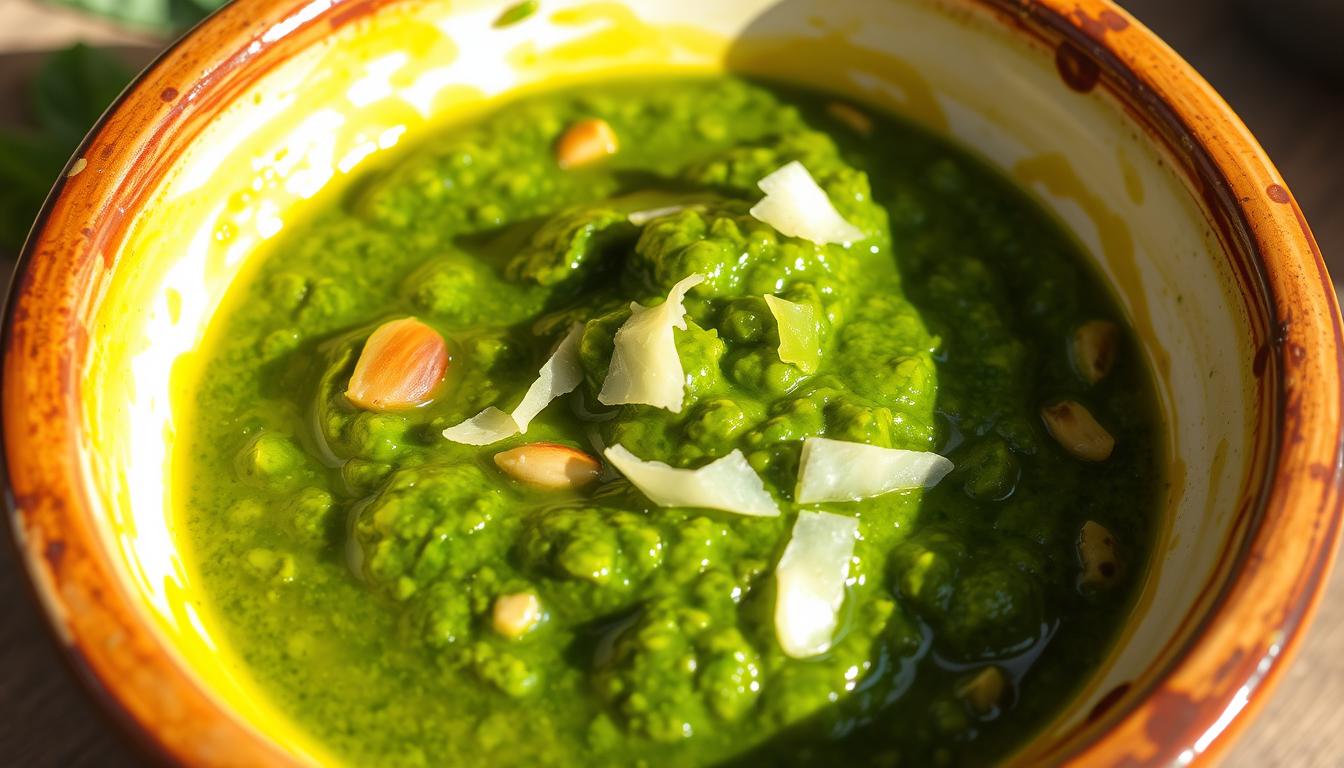
The original Genovese pesto recipe includes fresh basil, garlic, pine nuts, Parmesan cheese, and olive oil. This mix creates a flavorful and aromatic sauce that has been a cornerstone of Italian cuisine for centuries.
Traditional Ingredients and Variations
While traditional pesto is made with a specific set of ingredients, variations have emerged over time. Some use walnuts or almonds instead of pine nuts, or add sun-dried tomatoes for extra flavor.
Despite these variations, the essence of pesto remains the same. It’s a harmonious blend of fresh ingredients that come together to create a delicious and versatile sauce.
The Classic Ingredients of Pesto
Understanding the classic ingredients of pesto is key to making tasty homemade pesto. The traditional recipe has a few simple yet high-quality parts. These parts come together to make a flavorful pesto.
The Importance of Fresh Basil
Fresh basil is the heart of any pesto recipe. It’s important to use top-quality, fresh basil leaves for the best taste. Choose leaves that are bright green and without blemishes.

Garlic: The Flavor Booster
Garlic adds a strong and deep flavor to pesto. Getting the right amount of garlic is crucial. Too little, and it tastes bland. Too much, and it’s too strong.
Pine Nuts: The Creamy Crunch
Pine nuts add a rich, creamy texture to pesto. They might be pricey, but they’re worth it. They give homemade pesto a unique flavor and texture.
Cheese Selection for Pesto
The type of cheese used in pesto greatly affects its taste. Parmesan is traditional, but mixing it with other cheeses can make it more complex and flavorful.
By focusing on these classic ingredients and using them together, you can make a delicious and authentic cheese pesto. It’s perfect for many dishes.
How to Make Authentic Pesto
Making authentic pesto is easy. You just need a few ingredients and some basic tools. With a bit of practice, you can make a tasty sauce for pasta, pizza, and more.
Tools You’ll Need
To make homemade pesto, you’ll need a few tools. These include:
- A food processor or blender to blend the ingredients together
- A mortar and pestle for a more traditional approach
- A measuring cup to accurately measure the ingredients
- A spatula for scraping down the sides of the processor
- A storage container to keep your pesto fresh

Step-by-Step Instructions
Here’s how to make authentic pesto:
- Combine basil, garlic, and pine nuts: Put 2 cups of fresh basil leaves, 3 cloves of garlic, and 1/3 cup of pine nuts in a food processor.
- Process until well combined: Process the mixture until it’s well combined and the basil is finely chopped.
- Add Parmesan cheese: Add 1/2 cup of grated Parmesan cheese and process until the cheese is well combined with the basil mixture.
- Drizzle in olive oil: With the processor running, slowly pour in 1/4 cup of olive oil through the top.
- Season with salt: Add salt to taste, and process for another second or two to combine.
- Taste and adjust: Taste the pesto and adjust the seasoning as needed.
By following these simple steps, you can make a delicious pesto recipe. It’s perfect for many dishes. Enjoy your homemade pesto!
Creative Uses for Pesto
Pesto is more than just a sauce for pasta. It’s a flavorful addition to many dishes, bringing freshness and taste. Explore its uses from pasta to pizza and beyond.
Pesto Pasta Ideas
Pesto pasta is a classic, but you can make it your own. Add grilled chicken or shrimp for a protein boost. Mix in cherry tomatoes or roasted vegetables for extra flavor and nutrition.
- Spaghetti with pesto, cherry tomatoes, and mozzarella
- Fettuccine with pesto, grilled chicken, and roasted bell peppers
- Pesto lasagna with layers of fresh basil
Pesto as a Pizza Base
Make your pizza stand out with pesto as the base. Spread pesto on the dough, then add your favorite toppings. Mozzarella cheese and fresh basil leaves are a perfect pair.
- Preheat your oven to 425°F (220°C).
- Spread pesto on the pizza dough.
- Add your favorite toppings and bake for 15-20 minutes.
Enhancing Sandwiches and Wraps
Pesto can elevate sandwiches and wraps. Use it instead of mayonnaise or mustard for a healthier, tastier option.
| Sandwich/Wrap | Pesto Addition | Benefit |
|---|---|---|
| Grilled Chicken Sandwich | Pesto mayo | Adds creamy flavor |
| Veggie Wrap | Pesto spread | Boosts freshness |
| Turkey Club | Pesto on the side | Dipping sauce |

Storage Tips for Pesto
Pesto lovers know that storing this sauce properly is key. It keeps the flavor and aroma vibrant. Whether homemade or store-bought, the right storage makes a big difference.
Storing pesto right prevents oxidation. This keeps the sauce bright green and tasting good. Here are some tips for storing your pesto well.
Refrigeration Techniques
Refrigerating pesto keeps it fresh for a bit. Move it to an airtight container, like a glass jar. Press plastic wrap or foil on the pesto’s surface to block air.
Tips for Refrigerating Pesto:
- Store in an airtight container.
- Press plastic wrap or foil onto the pesto’s surface.
- Keep it in the refrigerator at a consistent temperature below 40°F (4°C).
- Use within a week for optimal flavor.

Freezing Pesto for Long-term Use
Freezing is great for longer storage. It keeps the flavor and color of pesto. Freezing in ice cube trays makes it easy to use just the right amount.
Freezing Tips:
- Fill ice cube trays with pesto, leaving a little space at the top.
- Cover the trays with plastic wrap or aluminum foil.
- Once frozen, transfer the pesto cubes to a freezer-safe bag or container.
- Label and date the containers for easy identification.
By following these storage tips, you can enjoy your pesto longer. It keeps the taste and nutritional value of your traditional or Italian pesto.
Nutritional Benefits of Pesto
Pesto is not just tasty; it’s also full of nutrients. Its core ingredients make it a healthy addition to meals.
Healthy Fats from Pine Nuts
Pine nuts are a key part of pesto. They are full of monounsaturated and polyunsaturated fats. These fats can lower bad cholesterol and reduce heart disease risk.
Pine nuts in pine nut pesto also have magnesium and vitamin E. These add to their nutritional value.

Antioxidant Properties of Basil
Basil, the main herb in pesto, is known for its antioxidant properties. It has vitamins A and C, and flavonoids and carotenoids. These help protect cells from damage.
The antioxidants in basil also help reduce body inflammation. This supports overall health.
Nutritional Content of Cheese
Cheese in cheese pesto recipes is a good source of protein and calcium. These are key for muscle and bone health.
But, cheese can also have saturated fat and calories. Enjoy garlic pesto or other pesto with cheese in moderation.
| Nutrient | Benefit | Ingredient |
|---|---|---|
| Healthy Fats | Lowers bad cholesterol, reduces heart disease risk | Pine Nuts |
| Antioxidants | Protects cells from damage, reduces inflammation | Basil |
| Protein, Calcium | Supports muscle and bone health | Cheese |
In conclusion, pesto is more than just a tasty sauce. It’s also a nutritious part of a balanced diet. Knowing its nutritional benefits lets you enjoy pesto while supporting your health.
Pesto Variations Around the World
Pesto has become a global favorite, with many countries adding their twist. While traditional Italian pesto is still loved, new flavors have been introduced. These changes cater to different tastes and dietary needs.
Italian Classic and Beyond
Traditional Italian pesto is a mix of basil, garlic, pine nuts, Parmesan, and olive oil. But, modern recipes have added sun-dried tomatoes and roasted garlic. These ingredients create exciting new tastes.

Vegan and Dairy-Free Options
More people are choosing plant-based diets, leading to vegan pesto options. Nutritional yeast gives a cheesy taste, while nuts and seeds add creaminess. Some popular vegan pesto types include:
- Cashew-based pesto
- Pumpkin seed pesto
- Spinach and walnut pesto
Regional Pesto Styles
Pesto isn’t just for Italy; other places have their own versions. For example, the French use walnuts instead of pine nuts. The Spanish add almonds and parsley. Here’s a look at pesto styles from around the world:
| Region | Main Ingredients | Characteristics |
|---|---|---|
| Italian | Basil, garlic, pine nuts, Parmesan | Classic, creamy, rich |
| French | Basil, garlic, walnuts, Gruyère | Nuttier, slightly sweet |
| Spanish | Parsley, garlic, almonds, Manchego | Herby, crunchy, savory |
Pesto’s adaptability shows in these global variations. Whether you prefer traditional Italian pesto or something new, there’s a pesto for everyone.
Pairing Pesto with Other Foods
Pairing pesto with other foods can make your meals better, whether it’s a simple dinner or a fancy dinner party. The secret is to know what pesto tastes like and pick foods that go well with it.
Pesto’s rich and vibrant taste goes well with many dishes. Choosing the right wine can make your meal even better.
Best Wines to Complement Pesto
When picking wine for pesto, think about the herbs in the pesto and what you’re eating. For a true Italian taste, try a white wine like Pinot Grigio or Vermentino. They match the fresh basil without covering it up.
- Pinot Grigio: Crisp and refreshing, ideal for lighter dishes.
- Vermentino: Offers a herbaceous note that complements basil.
- Gavi: A crisp and elegant Italian white wine that pairs nicely with pesto.
If you like red wine, a light one like Dolcetto or Pinot Noir is good, too. It’s great with heartier foods.
Ideal Side Dishes and Appetizers
Pesto is more than just for pasta. It’s great as a veggie dip, a sauce for grilled meats, or on bruschetta.
| Dish | Description | Pesto Pairing Idea |
|---|---|---|
| Grilled Chicken | Marinated chicken breast grilled to perfection. | Serve with a side of pesto sauce for dipping. |
| Bruschetta | Toasted bread rubbed with garlic and topped with diced tomatoes. | Drizzle with pesto before adding tomatoes for extra flavor. |
| Roasted Vegetables | A selection of seasonal vegetables roasted to bring out their natural sweetness. | Toss with pesto before roasting for a flavorful twist. |
For appetizers, use pesto as a dip for crackers or raw veggies, or on crostini.

By carefully choosing what to pair with pesto, you can make your meals both tasty and harmonious.
Troubleshooting Common Pesto Issues
Making the perfect homemade pesto needs the right ingredients and some troubleshooting skills. Traditional pesto is easy to make, but texture and flavor issues can pop up. These problems can mess with the sauce’s quality.

Too Thick? How to Adjust Consistency
Homemade pesto can sometimes be too thick. This usually happens if there’s not enough oil or it’s been blended too much. To fix it, slowly add more olive oil while blending. This way, you avoid making it too thin.
If your pesto is too thin, it might have too much oil or not enough pine nuts or cheese. Adding more pine nuts or cheese can thicken it. Or, you can reduce the oil or add breadcrumbs to soak up excess oil.
Balancing Flavors: When to Add More Ingredients
Getting the flavors right in your pesto is key. If it’s too garlicky, add more basil or cheese. If it’s not garlicky enough, a bit more garlic can help, but be careful not to overdo it.
For pesto that’s too cheesy or nutty, a bit more basil can balance it. If it’s too bland, a pinch of salt or more cheese can make it taste better. Tasting as you go lets you adjust the flavors to get it just right.
With these simple tips, you can improve your homemade pesto. You’ll get the perfect mix of consistency and flavor. This makes your pesto a great addition to your cooking.
Fun Facts About Pesto
Pesto has become a favorite in many places around the world. Its popularity keeps growing. We’ve seen how pesto is made and how it’s used in different ways. It’s clear that many people love this tasty sauce.
Pesto’s Rise to Fame
In recent years, Italian pesto has become very popular in America. Restaurants and home cooks love using pesto in many dishes. It’s used in pasta, pizza, sandwiches, and salads. Chefs and foodies love it because it makes simple meals taste great.
Celebrating Pesto
Pesto’s popularity is celebrated at festivals and competitions all year. These events bring together people who love pesto, chefs, and producers. They share their passion for this beloved sauce. Whether you’re a chef or a pesto lover, these festivals are a great way to enjoy pesto’s flavors and culture.